16 years one-stop China custom CNC machining parts factory

Hey there I’m VMT Sam!
With 25 years of CNC machining experience we are committed to helping clients overcome 10000 complex part-processing challenges all to contribute to a better life through intelligent manufacturing. Contact us now
 495 |
Published by VMT at Aug 04 2026 | Reading Time:About 8 minutes
495 |
Published by VMT at Aug 04 2026 | Reading Time:About 8 minutes


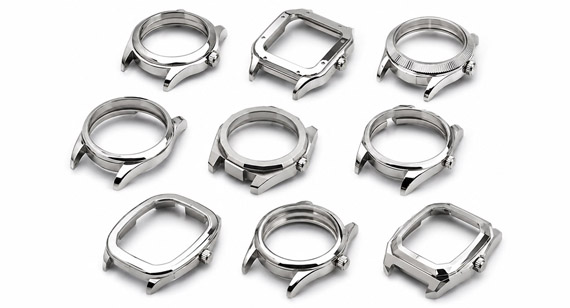
Choosing the wrong smartwatch case manufacturing method can create unnecessary tooling costs, thin-wall distortion, sealing failures, antenna problems, poor cosmetic consistency, or a process that cannot scale. The right route must balance your material, geometry, quantity, finish, tolerance, assembly, and product-validation requirements before production begins.
Smartwatch cases can be produced by CNC machining, die casting, plastic injection molding, metal injection molding, investment casting, ceramic forming and sintering, or additive manufacturing. CNC machining provides flexibility for prototypes and premium metal housings, while tooling-based methods can become more economical after the design and production volume are stable.
Each method changes your design freedom, initial investment, secondary machining, finish options, and manufacturing risks. This guide compares the main routes and explains how to select one for your smartwatch project.
A smartwatch case is more than an external decorative shell. It positions, protects, and connects many functional components within a compact wearable product.
Depending on the design, the housing may need to support:
The correct manufacturing method must therefore provide more than the required external shape.
It should also support:
Assembly Accuracy
The display seat, back-cover interface, button holes, sensor openings, internal cavity, screw bosses, and strap connection must align with their mating components.
A small positional error can create difficult assembly, uneven gaps, button interference, poor gasket compression, or a display that does not sit evenly in the housing.
Water-Resistant Structure
Gasket grooves and mating surfaces require controlled dimensions, edge conditions, flatness, and surface quality.
Manufacturing the housing correctly creates the conditions needed for a sealed assembly, but final water resistance also depends on gasket design, component compression, assembly procedures, and pressure or leak testing.
Wireless and Sensor Performance
A metal smartwatch enclosure can affect antenna placement and signal transmission. The housing design may require polymer, glass, or ceramic windows, insulated gaps, or other dedicated antenna regions.
The mechanical design and wireless engineering teams should confirm these requirements before the enclosure is finalized.
Cosmetic Quality
A smartwatch case is handled and viewed at close range. Scratches, dents, color differences, polishing waves, uneven brushing, coating marks, or visible gaps can reduce the perceived quality of the entire product.
Wearability
The case should provide sufficient strength while controlling weight, edge comfort, overall thickness, and contact surfaces against the wrist.
These requirements influence both material selection and the manufacturing route.
| Method | Typical Materials | Best Suited For | Initial Tooling | Secondary Processing | Main Risk |
| CNC machining from billet | Aluminum, stainless steel, titanium, brass, engineering plastics | Prototypes, premium products, low-to-medium volume, frequent design changes | Low | Finishing, engraving, inspection | Machining time, material waste, thin-wall deformation |
| Forged or extruded blank plus CNC | Aluminum, stainless steel, titanium | Stable metal designs and increasing production quantities | Medium to high | Precision CNC machining and finishing | Tooling investment and blank consistency |
| Die casting plus CNC | Aluminum, zinc, magnesium | Stable high-volume metal housings | High | Trimming, CNC machining, polishing, coating | Porosity, draft, flash, and cosmetic consistency |
| Plastic injection molding | PC, ABS, PC-ABS, PA, TPE and other polymers | Lightweight plastic housings and high-volume production | High | Trimming, coating, printing, assembly | Tooling changes, sink marks, warpage, visible parting lines |
| Metal injection molding | Stainless steel and selected metal powders | Compact complex metal parts at stable volume | High | Debinding, sintering, sizing, CNC finishing | Shrinkage, distortion, density, and size limitations |
| Investment casting plus CNC | Stainless steel, titanium and other castable alloys | Complex metal geometry and moderate volumes | Medium | CNC finishing, polishing, coating | Surface variation, porosity, dimensional variation |
| Ceramic forming and sintering | Zirconia and other technical ceramics | Premium, scratch-resistant, nonmetallic housings | High | Grinding, polishing, laser machining | Sintering shrinkage, brittleness, difficult finishing |
| Additive manufacturing | Polymer, stainless steel, titanium, aluminum | Concept models, complex prototypes, low-volume special designs | Low | Support removal, machining, polishing, coating | Surface roughness, dimensional variation, slow production |
No method is universally best. The most suitable route depends on how your product balances development speed, appearance, mechanical performance, volume, and investment.
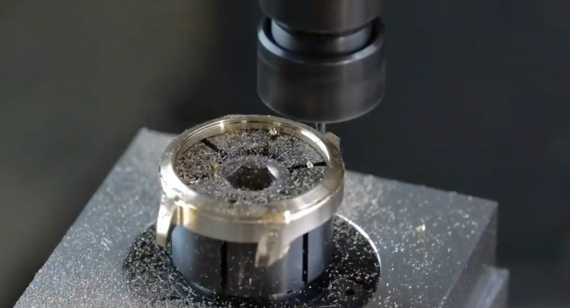
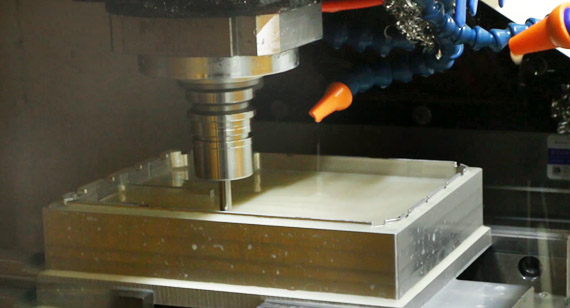
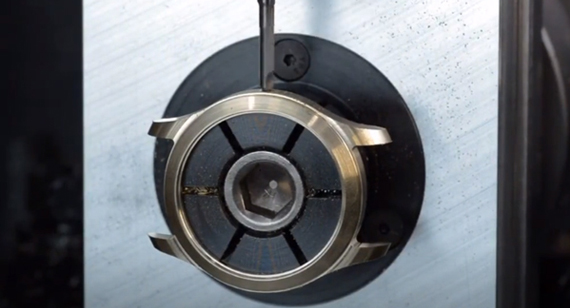
CNC machining removes material from a billet, plate, bar, or near-sized blank until the required housing geometry is produced.
For metal smartwatch cases, common processes include:
When Is CNC Machining Suitable?
CNC machining is often suitable when you need:
Because CNC machining does not require a dedicated molding or casting tool, it allows the design to be revised more easily during product development.
This makes it useful when the housing still requires assembly testing, waterproof-structure validation, antenna verification, or ergonomic changes.
Common CNC-machined smartwatch case materials include:
| Material | Customer Value | Main Machining Concern |
| 6061 aluminum | Lightweight, practical machinability, broad anodized color options | Thin-wall deformation and cosmetic protection |
| 6063 aluminum | Good surface appearance and anodizing response | Lower strength than some structural aluminum grades |
| 7075 aluminum | Higher strength for lightweight structures | Residual stress and anodizing color differences |
| 316L stainless steel | Premium weight, corrosion resistance, polished or brushed appearance | Tool wear, cutting heat, and polishing allowance |
| Grade 2 titanium | Lightweight premium feel and corrosion resistance | Burrs, heat, and surface damage |
| Grade 5 titanium | Higher strength and low weight | Tool wear and more demanding cutting control |
| Engineering plastics | Lightweight prototypes, internal carriers, and insulating features | Burrs, thermal movement, and dimensional stability |
CNC Machining Advantages
CNC machining provides:
CNC Machining Limitations
The main limitations include:
A design should not use CNC machining only because it requires precision. Cast, molded, forged, or sintered housings can also receive secondary CNC machining on critical features.
The real question is whether full machining from solid material provides the best balance for your development stage and expected quantity.
For a detailed description of drawing review, datum selection, rough machining, sealing features, finishing, and inspection, see the related CNC watch case manufacturing process guide.
Some smartwatch cases do not need to be machined entirely from a rectangular billet.
A forged, extruded, or otherwise near-net-shape blank can remove part of the shape before precision CNC machining begins.
How the Hybrid Route Works
A typical process may include:
The blank provides much of the initial material distribution, while CNC machining controls features such as:
Advantages
This route may reduce:
Forging may also improve material flow and mechanical performance in suitable designs.
Limitations
The project normally requires:
A near-net blank should not be assumed to eliminate precision machining. Critical fits, gasket grooves, holes, threads, and cosmetic references may still require CNC finishing.
Tip: Before investing in a forged or extruded blank, confirm that the smartwatch design, display module, button layout, antenna strategy, and back-cover structure are unlikely to change.
Die casting injects molten metal into a steel mold under pressure. It is commonly associated with aluminum, zinc, and magnesium alloy components.
For a smartwatch housing, die casting may produce a near-net case that later receives trimming, machining, polishing, coating, and inspection.
When Is Die Casting Suitable?
Die casting may be considered when:
Features That May Still Need CNC Machining
A die-cast housing may require secondary machining for:
The casting process creates the primary shape, while machining establishes the dimensions that directly affect assembly and sealing.
Die Casting Advantages
Potential advantages include:
Die Casting Risks
Important risks include:
Porosity can become visible during polishing or affect sealing surfaces when material is removed during machining.
The supplier should therefore determine which surfaces remain as cast and which surfaces require machining or cosmetic finishing.
Note: A visually premium metal housing usually requires more than the die-casting operation alone. Tooling design, trimming, machining, polishing, blasting, coating, inspection, and protective handling all influence the final appearance.
Plastic injection molding heats polymer material and injects it into a mold cavity. After cooling, the part is ejected and prepared for further finishing or assembly.
Smartwatch products may use injection molding for:
Common Materials
Possible materials include:
The final material should be selected based on strength, heat, moisture, chemical exposure, appearance, skin contact, antenna performance, and assembly requirements.
Injection Molding Advantages
Injection molding can provide:
Injection Molding Risks
Common concerns include:
A plastic housing must be designed for molding rather than copied directly from a CNC-machined metal case.
Important DFM considerations include:
Is Injection Molding Cheaper Than CNC Machining?
Injection molding may provide a lower unit cost after sufficient production volume, but it requires a larger initial tooling investment.
CNC machining can be more practical when:
The correct decision should compare total project cost, not only the final unit price.
Metal injection molding, commonly called MIM, combines fine metal powder with a binder. The mixture is molded into a shape, followed by debinding and sintering.
The part shrinks during sintering, so the mold and process must compensate for controlled dimensional change.
When Can MIM Be Considered?
MIM may suit:
For a large, thin, highly cosmetic smartwatch case, MIM feasibility depends heavily on geometry, wall distribution, shrinkage control, surface requirements, and supplier capability.
It may be more practical for smaller housing components than for every complete enclosure design.
MIM Advantages
Potential benefits include:
MIM Risks
Important risks include:
Critical features may still require:
MIM should therefore be evaluated as a near-net manufacturing route rather than an automatic replacement for machining.
Investment casting uses a disposable pattern and ceramic shell to create a metal casting with relatively complex geometry.
It can be considered for stainless steel, titanium, and other compatible alloys depending on supplier capability and project requirements.
Suitable Applications
Investment casting may be useful when:
Advantages
Potential advantages include:
Risks
Important considerations include:
Functional features such as sealing faces, gasket grooves, display seats, threads, and precision holes should normally be evaluated for CNC finishing.
Investment casting can reduce heavy material removal, but it should not be selected without checking whether the cosmetic and dimensional requirements remain achievable after casting and finishing.
Premium smartwatch cases may use technical ceramic, commonly zirconia-based material, because it provides a distinctive appearance, high hardness, scratch resistance, and a nonmetallic surface.
The process is more complex than simply compressing ceramic powder into the final case.
Typical Ceramic Housing Process
A general production route may include:
Ceramic Advantages
Ceramic can provide:
Ceramic Risks
Key challenges include:
Internal corners, thin sections, holes, sharp transitions, and impact-sensitive edges require careful design.
Because fired ceramic is hard and brittle, post-sintering dimensional correction is more difficult and expensive than machining aluminum.
When Should Ceramic Be Selected?
Ceramic is most suitable when its appearance, scratch resistance, nonmetallic behavior, and premium positioning provide enough customer value to justify the more demanding process.
It should not be selected only because it looks premium. The project should also consider drop performance, attachment design, sealing interfaces, repairability, and production yield.
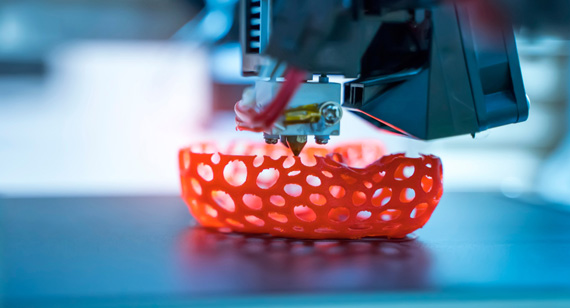
Additive manufacturing builds the smartwatch housing layer by layer from digital design data.
Depending on the technology, the process can use:
Best Uses for 3D Printing
3D printing is useful for:
Polymer Prototypes
Polymer printing can quickly provide a physical model for checking:
However, the material may not reproduce the weight, rigidity, surface finish, sealing behavior, or thread performance of the final metal housing.
Metal Additive Manufacturing
Metal printing can produce complex internal structures and low-volume metal parts, but it normally requires:
Limitations
Potential limitations include:
A printed prototype is valuable for learning, but it should not automatically be treated as proof that the same design is suitable for molding, casting, ceramic sintering, or production CNC machining.
These three routes are often compared during smartwatch development.
| Decision Factor | CNC Machining | Die Casting | Injection Molding |
| Typical housing material | Aluminum, stainless steel, titanium | Aluminum, zinc, magnesium | Engineering plastics |
| Initial tooling investment | Low | High | High |
| Design-change flexibility | High | Low after tooling | Low after tooling |
| Prototype suitability | Excellent | Limited before production tooling | Limited before production tooling |
| High-volume unit cost | Higher | Lower when volume supports tooling | Lower when volume supports tooling |
| Metal appearance | Excellent | Possible with secondary finishing | Requires paint, coating, decoration, or molded texture |
| Functional feature precision | Directly machinable | Often needs CNC finishing | Controlled through mold and shrinkage design |
| Thin-wall risk | Machining deformation | Filling, porosity, and distortion | Warpage, sink, and flow defects |
| Cosmetic risk | Tool marks and finishing variation | Porosity, parting lines, and casting defects | Weld lines, flow marks, gate marks, and parting lines |
| Best use | Prototypes, premium cases, low-to-medium volume | Stable high-volume metal housings | Stable high-volume plastic housings |
The best route may also be a hybrid.
For example:
The following questions should be answered before selecting a route.
What Material Does Your Product Require?
Material affects:
A plastic housing cannot provide the same weight and metal feel as stainless steel. Ceramic cannot be designed exactly like aluminum. A die-cast alloy may not polish or anodize in the same way as a wrought CNC-machined alloy.
Is the Design Frozen?
CNC machining and 3D printing are usually easier to revise during development.
Molding, die casting, MIM, forging, and ceramic forming require more confidence in the design because tooling changes can be expensive and time-consuming.
What Is the Expected Production Quantity?
Production volume affects how tooling cost is distributed across the parts.
A tooling-based method may reduce unit cost after demand is sufficient, but the business case should include:
How Complex Is the Geometry?
Consider:
Complexity alone does not determine the route. The design must also be compatible with tool access, mold release, draft, material flow, shrinkage, support removal, or sintering.
What Surface Finish Is Required?
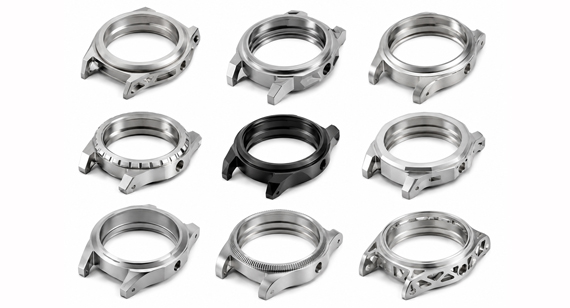
A premium smartwatch case may require:
The chosen material and method must support the required finish without exposing porosity, parting lines, sink marks, printing layers, or uncontrolled color variation.
Which Dimensions Affect Assembly?
Critical dimensions may include:
The manufacturing route must provide a reliable way to inspect and control these features.
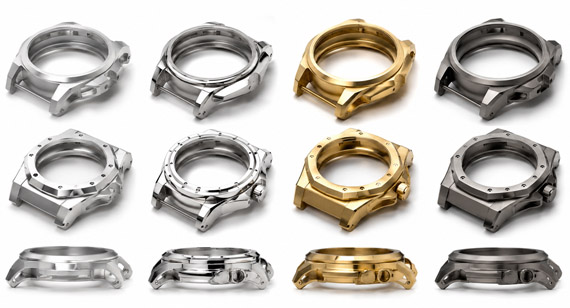
| Smartwatch Case Material | Suitable Manufacturing Routes | Common Surface Finishes | Main Customer Consideration |
| 6061 aluminum | CNC machining, forging plus CNC, selected casting routes | Anodizing, blasting, brushing, engraving | Lightweight and practical for premium prototypes and production |
| 7075 aluminum | CNC machining, forging plus CNC | Anodizing, hard anodizing, blasting | Higher strength but more demanding stress and finish control |
| Stainless steel | CNC machining, MIM, investment casting, forging plus CNC | Polishing, brushing, PVD, passivation | Premium appearance and higher weight |
| Titanium | CNC machining, forging plus CNC, investment casting, metal printing | Blasting, brushing, polishing, PVD | Low weight and premium positioning with higher processing cost |
| Zinc alloy | Die casting plus CNC | Plating, painting, PVD-type decorative coatings where suitable | Good castability but greater weight |
| Magnesium alloy | Die casting plus CNC | Conversion coating, painting, protective coating | Very low weight but demanding corrosion protection |
| PC or ABS | Injection molding | Mold texture, painting, printing, coating | Lightweight and cost-efficient at scale |
| PC-ABS or reinforced nylon | Injection molding | Mold texture, painting, coating | Better structural balance for plastic housing designs |
| Zirconia ceramic | Forming, sintering, grinding, polishing | Polishing, laser marking | Scratch resistance and premium nonmetallic appearance |
Tip: Select the material and manufacturing method together. Choosing a material first and forcing it into an unsuitable process often increases cost and quality risk.
Regardless of the selected method, several enclosure risks should be controlled before production.
Thin-Wall Deformation
Lightweight metal smartwatch cases often contain a large internal cavity and relatively thin external walls.
During CNC machining, the part can deform because of:
During molding or casting, deformation can result from:
The solution depends on the process, but the design should avoid unnecessary thickness changes and unsupported areas.
Display and Back-Cover Fit
The display and back cover often define the major visible gaps and sealing interfaces.
Control may be required for:
Button and Rotating-Control Alignment
Side buttons, crown-style controls, and pushers must align with the internal switch or mechanism.
A hole can meet its diameter tolerance but still cause assembly problems when its position or axis is incorrect.
Speaker and Microphone Openings
Small openings require:
Loose burrs or finishing residue can create assembly and acoustic risks.
Sensor and Charging Features
Back-cover sensors and charging contacts may require controlled positioning relative to the electronics and wrist-contact surface.
The housing design should consider:
Antenna Regions
Metal housings may require antenna gaps or nonmetallic windows.
These areas should be coordinated with:
The antenna solution should be validated on an assembled functional device rather than assumed from the housing geometry alone.
Surface-Finish Allowance
Polishing removes material, while anodizing, plating, paint, and PVD add or alter the surface layer.
Critical fits may require:
Burrs and Contamination
Small smartwatch cases contain many holes, pockets, and intersecting features where burrs, chips, polishing compound, or blasting media can remain.
Cleaning and visual inspection should be included before assembly.
For a detailed analysis of deformation, burrs, tolerance loss, thread defects, and appearance problems, see the guide to common CNC watch case machining problems.
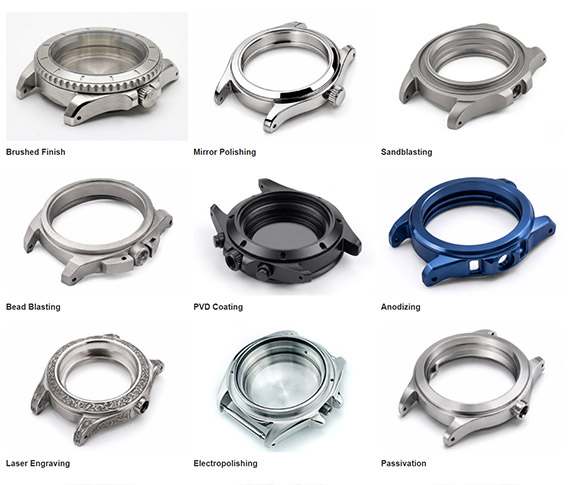
Surface finishing should be selected according to both material and manufacturing route.
| Material or Process | Suitable Finishes | Main Risk |
| CNC-machined aluminum | Bead blasting, brushing, anodizing, hard anodizing, engraving | Color differences, rack marks, edge rounding, fit changes |
| CNC-machined stainless steel | Polishing, brushing, blasting, PVD, passivation | Polishing waves, scratches, mixed-finish inconsistency |
| CNC-machined titanium | Blasting, brushing, polishing, PVD | Surface damage, color variation, difficult polishing |
| Die-cast aluminum or zinc | Blasting, polishing, painting, plating, coating | Exposed porosity, parting lines, surface variation |
| Injection-molded plastic | Mold texture, painting, printing, laser marking, decorative coating | Weld lines, flow marks, gate visibility, paint adhesion |
| Ceramic | Precision polishing, laser marking | Chipping, edge damage, polish inconsistency |
| Metal-printed housing | Machining, blasting, polishing, coating | Layer lines, support marks, porosity, high finishing effort |
When a housing combines several finishes, define:
A written instruction such as “black anodized” or “mirror polished” may not be enough to establish batch appearance.
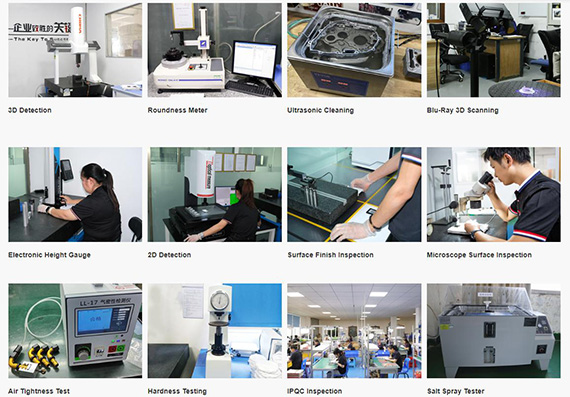
Inspection should cover dimensions, geometry, function, and appearance.
Incoming Material Inspection
Verify:
First-Article Inspection
Before batch production, verify:
In-Process Inspection
In-process measurement helps identify:
Final Dimensional Inspection
Possible equipment includes:
VMT’s watch-case page describes the use of first-article, in-process, surface-finish, final, and outgoing inspection, together with CMM, optical systems, surface-roughness equipment, and protective packaging.
Functional Inspection
Functional checks may include:
Cosmetic Inspection
Inspect under defined lighting for:
Water-resistance testing should be performed on the completed assembly according to the product’s validation requirements. Housing inspection alone cannot prove the performance of the assembled device.
| Project Stage | Recommended Focus | Suitable Methods |
| Concept model | Shape, size, ergonomics, component space | Polymer 3D printing, CNC plastic prototype |
| Functional engineering prototype | Assembly, strength, buttons, display, back cover, sealing structure | CNC-machined aluminum, stainless steel, titanium, or engineering plastic |
| Cosmetic prototype | Appearance, texture, color, finish boundaries | CNC machining with production-intent finishing |
| Pilot production | Repeatability, fixtures, inspection, assembly yield | CNC machining or production-intent hybrid process |
| Stable volume production | Unit cost, cycle time, tooling life, process capability | CNC, forging plus CNC, die casting plus CNC, injection molding, MIM, or ceramic production |
| Special or low-volume product | Custom geometry and lower tooling commitment | CNC machining or additive manufacturing plus CNC finishing |
A frequent mistake is selecting the final mass-production process before the product has completed functional validation.
Another mistake is approving only a visually attractive prototype without checking whether the production route can repeat its dimensions and appearance.
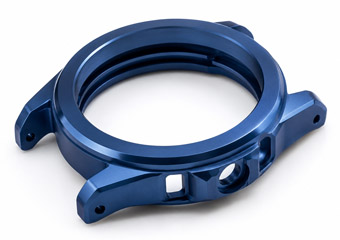
The following example illustrates a common project pattern.
Project Background
A wearable-device development team required a lightweight aluminum smartwatch housing for functional prototypes and a later pilot batch.
The housing included:
Project Challenges
The main manufacturing risks were:
Manufacturing Solution
The engineering review recommended:
Result
The prototype was used to verify display fit, back-cover assembly, button alignment, and finish appearance before the pilot batch was released.
The project demonstrates why manufacturing-route selection must include fixtures, finishing, inspection, and assembly validation—not only the choice of CNC machining or molding.
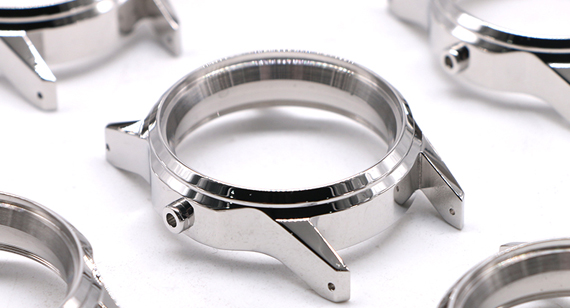
A practical development route may include:
Before scaling production, establish:
Note: Changing from a CNC prototype to a molded, cast, MIM, or ceramic production design may require geometry changes. A design that machines successfully is not automatically ready for mold release, shrinkage, sintering, material flow, or ejection.
Manufacturing Method
CNC machining has lower dedicated tooling investment but may have a higher unit cost at large volumes.
Casting, molding, MIM, forging, and ceramic processes require more tooling and validation but may reduce unit cost after the production quantity supports the investment.
Material
Material affects:
Geometry
Cost increases with:
Tolerances
Tighter tolerances can require:
Apply tight tolerances to the features that affect assembly, sealing, or function rather than every dimension.
Surface Finish
Mirror polishing, mixed brushing and polishing, premium anodizing, PVD, decorative coatings, and complex masking can add more cost and lead time than the machining itself.
Quantity and Design Stability
A stable high-volume project can justify tooling investment. A developing product with frequent revisions may be better suited to CNC machining until the design is validated.
VMT focuses on custom CNC machining solutions for smartwatch and wearable-device housings, from functional prototypes to repeat production.
DFM and Manufacturing-Route Review
Before machining, the engineering team can review:
VMT’s watch-case service page presents engineering review, prototype support, multi-axis machining, finishing coordination, and production support for smartwatch and wearable-device projects.
Prototype Manufacturing
CNC machining can produce functional housings without waiting for a dedicated mold or casting die. This allows you to verify the structure before committing to a production tool.
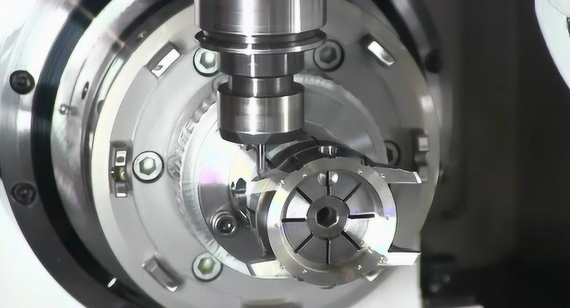
Three-, Four-, and Five-Axis Machining
Depending on the geometry, multi-axis CNC machining can be used for:
Fixture and Machining-Sequence Optimization
Custom fixtures and controlled machining sequences help reduce:
In-Process and Final Inspection
Inspection can be planned around the critical dimensions defined by your assembly rather than applying the same measurement level to every feature.
Surface-Finishing Coordination
VMT can coordinate suitable finishing routes for CNC-machined aluminum, stainless steel, titanium, and other materials, including:
Prototype-to-Production Support
After prototype validation, machining fixtures, toolpaths, inspection standards, approved finish samples, and packaging methods can be transferred into pilot and batch production.
The best smartwatch case manufacturing method is not simply the fastest process or the process with the lowest quoted unit price. It is the method that can reliably achieve your material, assembly, sealing, antenna, appearance, quantity, and product-development requirements.
CNC machining is often the practical starting point for functional metal prototypes and premium housings. As production grows, forging, extrusion, die casting, injection molding, MIM, investment casting, or ceramic manufacturing may become suitable when the design and business case support the required tooling.
Upload your 2D drawings and 3D models to request a quotation and DFM review. VMT can help you evaluate material selection, CNC machinability, wall thickness, fixtures, critical tolerances, sealing features, surface finishing, inspection, and prototype-to-production risks.
Send your smartwatch case drawings for a custom quotation and engineering review.
Send your 2D drawings, 3D CAD models, material, target quantity, critical tolerances, sealing requirements, mating-component information and surface-finish reference. VMT will review your smartwatch case project and provide a practical manufacturing-route recommendation, DFM feedback and quotation.
All information and uploaded files are secure and confidential.
1 Tell us what you need
2 Get solution & quote
3 Approve production
Email: inquiry@vimetal.com.cn
What manufacturing methods are used for smartwatch cases?
Smartwatch cases can be manufactured using CNC machining, die casting, injection molding, metal injection molding, investment casting, ceramic forming and sintering, forging, extrusion, or additive manufacturing.
The most suitable method depends on material, geometry, quantity, finish, tolerance, and product-development stage.
Is CNC machining suitable for smartwatch cases?
Yes. CNC machining is suitable for aluminum, stainless steel, titanium, and engineering-plastic smartwatch housings, particularly during prototyping, low-volume production, premium product manufacturing, and projects with frequent design changes.
Is CNC machining better than die casting?
Neither method is universally better.
CNC machining provides greater design flexibility and lower tooling investment, while die casting may reduce unit cost for stable high-volume metal housings. Die-cast cases often still require CNC machining on critical assembly and sealing features.
Is injection molding cheaper than CNC machining?
Injection molding can provide a lower unit cost at high volumes, but it requires dedicated tooling.
CNC machining may be more economical for prototypes, low quantities, changing designs, and premium metal housings.
Can a CNC-machined prototype be used directly for injection-molding design?
Not always.
An injection-molded design needs draft angles, controlled wall thickness, suitable ribs and bosses, gate planning, ejection features, and shrinkage allowance. The CNC prototype may need to be redesigned before mold development.
Which aluminum is commonly used for CNC smartwatch cases?
6061 is a practical option because it combines low weight, machinability, corrosion resistance, and anodizing capability.
6063 may suit appearance-focused aluminum housings, while 7075 may be considered where higher strength is required and its additional machining and finishing considerations are acceptable.
Which material gives a smartwatch the most premium appearance?
Stainless steel, titanium, ceramic, and well-finished aluminum can all provide a premium appearance.
The best choice depends on the desired weight, color, finish, scratch resistance, corrosion performance, cost, and brand positioning.
Does a metal smartwatch case affect the antenna?
A metal enclosure can affect antenna performance if the antenna and housing are not designed together.
The product may require an antenna gap, polymer or ceramic window, insulated feature, or another RF-transparent region. Final performance should be validated on the assembled device.
How do you prevent deformation in a thin aluminum smartwatch housing?
Common controls include balanced stock removal, staged roughing and finishing, reduced clamping force, custom fixtures, controlled cutting heat, intermediate inspection, and sufficient finishing allowance.
Does anodizing affect smartwatch case dimensions?
Yes. Anodizing changes the surface layer and can affect close-fitting bores, threads, gasket grooves, and assembly interfaces.
Critical features may require dimensional compensation, masking, or inspection after anodizing.
Can CNC machining guarantee smartwatch waterproofing?
No. CNC machining can create accurate gasket grooves and sealing surfaces, but final water resistance also depends on gasket design, adhesives, fasteners, assembly, component quality, and pressure or leak testing.
What files are required for a smartwatch case quotation?
For an accurate quotation and DFM review, provide:
How do I choose between CNC machining and a production mold?
Use CNC machining when the design is still being validated, quantities are limited, or a premium machined-metal housing is required.
Consider molding or casting when the design is stable, demand supports tooling investment, and the geometry is suitable for that process.


 +86 15099911516




 Read more