16 years one-stop China custom CNC machining parts factory

Hey there I’m VMT Sam!
With 25 years of CNC machining experience we are committed to helping clients overcome 10000 complex part-processing challenges all to contribute to a better life through intelligent manufacturing. Contact us now
 155 |
Published by VMT at Apr 29 2026 | Reading Time:About 3 minutes
155 |
Published by VMT at Apr 29 2026 | Reading Time:About 3 minutes


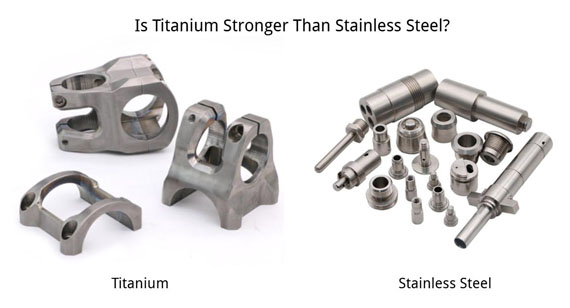
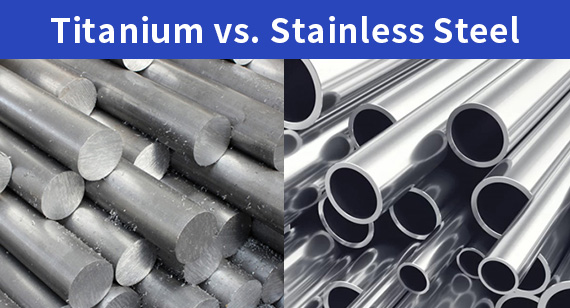
When it comes to “strong”, “strength” may be the first word that comes to your mind. Especially the “tensile strength” in engineering is the most referred to—the max force that you can pull the material apart.
But actually, if you ask “if titanium stronger than stainless steel”, it is not only the plain data of their “tensile strength” comparison; their yield strength (resistance to permanent deformation), specific strength (strength-to-weight ratio), environmental durability (resistance to fracture in corrosive settings), hardness (wear resistance), and fatigue resistance (durability under cyclic loading)—all of these factors are integrated into the comprehensive assessment of what makes a material “strong.”
Whether the stainless steel or titanium alloy parts used in your products are the most suitable choice is also based on the aforementioned considerations. Additionally, this blog will also share a case study on how our factory successfully helped a client choose between titanium and stainless steel, utilizing CNC machining to create parts that are both cost-effective and perfectly matched to their performance requirements.
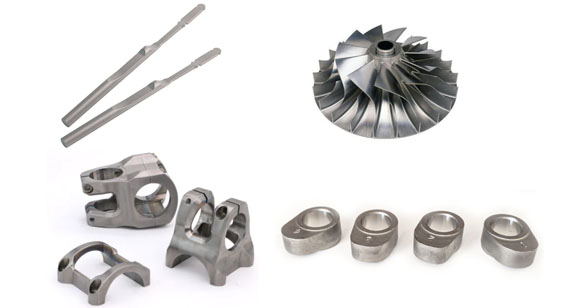
Suppose you want to tear a phone case made of metal apart, the force you put just make it break is the tensile strength. And suppose you want to bend the same phone case; the force you put just make it bend and can't spring back is the yield strength. Bending happens before it breaks, so YS is smaller than TS.
If you check strength of titanium vs stainless steel—many grades of them have both similarly high levels:
Titanium Alloys(Hardened State)
Stainless Steels(Hardened State)
But the most important factor is that the density of titanium (~4.5 g/cm³) is only 60% of stainless steel(~7.9–8.0 g/cm³).
This means—if you want a thin and tough enclosure, titanium can be thinner and tougher than stainless steel.
For these common uses, you’d better take advantage of titanium’ superior strength.
Supplementary Table of Mechanical Strength Comparison: Titanium vs. Stainless Steel
| Type |
Material Grade |
Tensile (Annealed) [MPa] |
Tensile (Hardened) [MPa] |
Yield (Annealed) [MPa] |
Yield (Hardened) [MPa] |
| Titanium | Grade 2 (CP Ti) | 345 | - | 275 | - |
| Grade 5 (Ti-6Al-4V) | 895 - 930 | 1050 - 1170 | 825 - 870 | 960 - 1050 | |
| Grade 9 (Ti-3-2.5) | 620 | 860 | 480 | 725 | |
| Ti-10-2-3 | 900 | 1200 - 1400 | 850 | 1100 - 1260 | |
| Beta C (Ti-38-6-4-4) | 860 | 1170 - 1380 | 820 | 1100 - 1240 | |
| Stainless Steel | 304 SS | 515 | 860 | 205 | 690 |
| 316 SS | 515 | 860 | 205 | 690 | |
| 440C SS | 760 | 1800 - 1970 | 450 | 1850 | |
| 17-4 PH | 1100 | 1310 - 1450 | 1000 | 1170 - 1250 | |
| 2205 Duplex | 655 - 820 | 1000 | 450 - 550 | 850 |
If your parts are used for aerospace or drone uses, do not use stainless steel—specific strength (the strength-to-weight) of titanium is much better than stainless steel as we’ve discussed their density and tensile strength in the last section.
Not only can weight reduction of the whole assembly reduce the transportation costs or the cost of your raw materials for processing, although these are truly vital. It affects that:
But if specific strength is not on your priority, use stainless steel to produce components can be also strong and cheaper.
Corrosion Resistance
Let’s say, your parts are used in marine like sensor, or chemical containers, or components for food equipment, actually stainless steels are good enough for these options (like 2205 SS for oil and heavy chemical industries; 316SS for ship components,etc). Titanium alloys is indeed more excellent than stainless steel for chloride resistance as it is inert, but not economical for above motioned uses unless you want a more light-weight design or extremely corrosion resistance.
But there is one exception that titanium can’t be replaced by stainless steel—titanium is biocompatible, so you may only use titanium instead of stainless steel for medical implants (such as bone screws, joint replacements, and dental implants) or long-term contact surgical tools.
Fatigue Resistance
Titanium is the much better suitable one for your products that are subjected to continuous vibration or cyclic stress (such as turbine blades or high-performance fasteners). It’s not necessarily that all stainless steels have lower fatigue strength than titanium. Rather, a specific grade like titanium grade 5 (Ti-6Al-4V) is the superior choice because it pairs high fatigue resistance with exceptional yield strength (preventing deformation), all while offering a compelling cost-to-performance ratio for high-end applications.
Hardness
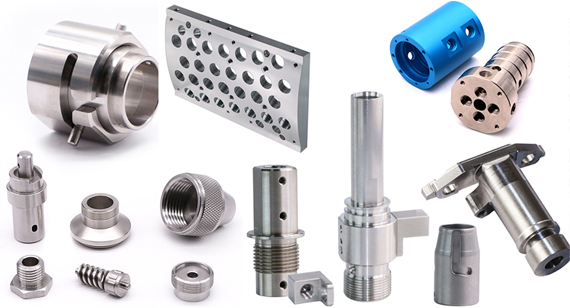
If you want gears or shafts for wear-resistant uses like those in automotive transmissions. Some stainless steel (like the 440C) performs better in wear-resistant uses while titanium isn’t suitable. Titanium is prone to be 'galling' that two titanium parts under friction will stick to each other. So even if some titanium alloys have good hardness, they are still not good for your fictive uses.
Supplementary Table of Hardness, FR, and CR of Titanium vs. Stainless Steel
| Type |
Material Grade |
Hardness (HRC/HB) (Hardened/STA) |
Fatigue Strength (MPa) (Hardened/STA) |
Corrosion Resistance (Level / PREN) |
| Titanium |
Grade 2 (CP Ti) | 160 - 200 HB(Pure Ti, can’t be hardened) | 170 - 220 | Inert (Excellent ) |
| Titanium |
Grade 5 (Ti-6Al-4V) | 36 - 40 HRC | 500 - 650 | Inert (Excellent) |
| Titanium |
Grade 9 (Ti-3-2.5) | 28 - 32 HRC | 400 - 500 | Inert (Excellent) |
| Titanium |
Ti-10-2-3 | 40 - 45 HRC | 600 - 750 | Inert (Excellent) |
| Titanium |
Beta C (Ti-38-6-4-4) | 42 - 48 HRC | 550 - 700 | Inert (Excellent) |
| Stainless Steel |
304 SS | 25 - 30 HRC | 350 - 450 | Moderate (PREN ~18-20) |
| Stainless Steel |
316 SS | 25 - 32 HRC | 350 - 450 | Good (PREN ~23-28) |
| Stainless Steel |
440C SS | 58 - 60 HRC | 600 - 750 | Low (PREN ~12-15) |
| Stainless Steel |
17-4 PH | 40 - 45 HRC | 600 - 700 | Good (PREN ~16-18) |
| Stainless Steel |
2205 Duplex | 32 - 36 HRC | 450 - 550 | Excellent (PREN ~30-36) |
Based on our years of CNC experience, here is how we advise you across different sectors:
Aerospace Industry
Marine & Subsea
A developer of long-range maritime surveillance drones approached VMT CNC machining factory with a critical bottleneck: their landing gear swivel housing. The prototype, made from 316 Stainless Steel, was incredibly durable and handled the corrosive salty air perfectly, but it was far too heavy. The excess weight was forcing the client to limit the drone's sensor payload, essentially handicapping its primary mission. They needed the extreme corrosion resistance and "non-negotiable" strength of steel, but at a weight profile that wouldn't compromise their 10-hour flight endurance requirement.
VMT’s engineering team performed a structural simulation and recommended a complete material pivot to Grade 5 Titanium. This allowed us to provide the same yield strength as the original steel part while slashing the component weight by 44%. However, titanium’s "gummy" nature and low thermal conductivity presented a challenge for the part’s deep-threaded holes and tight-tolerance bores. To solve this, VMT utilized our high-torque, 5-axis CNC centers and implemented a high-pressure through-spindle cooling system to prevent heat deformation. We also applied a specialized vacuum nitriding process to the titanium surface to match the wear resistance the client originally sought in stainless steel.
By switching to VMT-machined titanium components, the client successfully reclaimed over 1.2kg of "lost weight" across the entire assembly. This weight savings allowed them to upgrade the drone's primary thermal camera to a more powerful model, significantly increasing the product's market value. Despite the higher material cost of titanium, the total lifecycle cost decreased because the parts showed zero signs of fatigue or chloride pitting during sea-trial testing. The client has since transitioned all critical structural components of their fleet to VMT-machined titanium, establishing their drone as the most durable and lightweight in its class.
As we’ve explored, the question "Is titanium stronger than stainless steel?" doesn't have a one-size-fits-all answer. "Strength" is a multidimensional metric. While stainless steel may offer superior hardness and cost-efficiency for industrial wear parts, titanium dominates when specific strength (strength-to-weight ratio) and biocompatibility are non-negotiable.
Choosing the right material is a balancing act between mechanical requirements and manufacturing reality. At VMT CNC machining factory, we believe the "best" material is the one that optimizes your product’s performance while keeping production viable. Whether it’s slashing weight for a high-end UAV or ensuring the longevity of a medical implant, our goal is to help you navigate these technical trade-offs through precision engineering and advanced CNC solutions. If you’re still weighing the pros and cons of titanium versus stainless steel for your specific application, let our team provide a structural assessment and a cost-optimized machining strategy. Contact VMT for an Expert Consultation

Is titanium worth the extra investment for my project?
If your application requires biocompatibility (medical), extreme weight reduction (aerospace/drones), or absolute corrosion resistance (chemical/marine), titanium is well worth the investment. However, if weight is not a constraint and the environment is not highly corrosive, stainless steel offers a much more cost-effective solution with excellent durability.
Can I use titanium for gears and high-friction moving parts?
Generally, no. Titanium is prone to galling—a form of wear caused by adhesion between sliding surfaces. If two titanium parts rub against each other, they tend to "stick" or seize. For gears or high-wear shafts, hardened stainless steel (like 17-4 PH or 440C) is usually a much better choice unless a specialized surface coating (like DLC or Nitriding) is applied.
Does titanium rust in saltwater environments?
Unlike many grades of stainless steel that may eventually suffer from pitting or crevice corrosion in marine environments, titanium is virtually immune to saltwater corrosion. It forms a stable, protective oxide layer instantly upon exposure to oxygen.
Why is titanium CNC machining more expensive than stainless steel?
The higher cost is driven by two factors: raw material price and machining complexity. Titanium has low thermal conductivity, meaning heat stays at the cutting edge rather than dissipating through the chip. This leads to faster tool wear. Additionally, its "gummy" nature requires specialized high-torque equipment and slower feed rates, which increases the total machining time.
Is stainless steel stronger than titanium?
Not necessarily; while high-strength stainless steels can have a higher absolute tensile strength, titanium is significantly stronger when measured by its strength-to-weight ratio (specific strength).
How much stronger is titanium than stainless steel?
In terms of specific strength, titanium alloys are approximately 2 times stronger than standard stainless steel, allowing them to provide equivalent structural integrity at roughly 60% of the weight.


 +86 15099911516




 Read more