
16 years one-stop China custom CNC machining parts factory
The VMT blog is dedicated to sharing our hard-earned knowledge in prototype manufacturing. We hope these articles will help you optimize your product designs and gain deeper insight into the world of rapid prototyping. Enjoy the read!
Get an Instant Quote All uploads files are safe and confidential
 VMT
VMT  2025 09 08
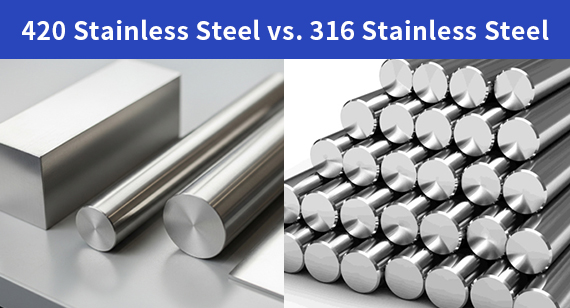
 420 stainless steel is a hardenable martensitic steel known for high wear resistance, while 316 stainless steel is an austenitic grade with excellent corrosion resistance. Choose 420 for cutting tools and wear parts; select 316 for marine, chemical, or medical applications.
 66
66
 Read more
 VMT 2025 09 06
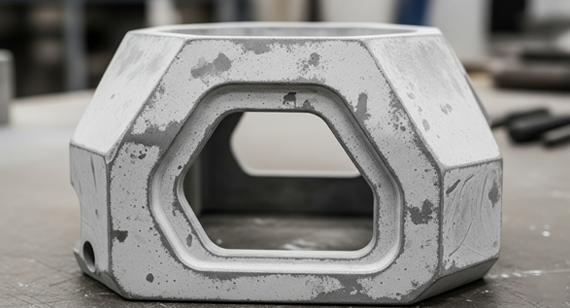
 True white anodizing isn’t feasible because anodic pores don’t accept white dye and the oxide’s light-scattering makes whites look gray or chalky. Instead, use powder coating, electrophoretic coating, or PEO/ceramic finishes for durable white on aluminum parts, then specify sealing and gloss to match appearance and corrosion targets.
66
Read more
 VMT 2025 09 05
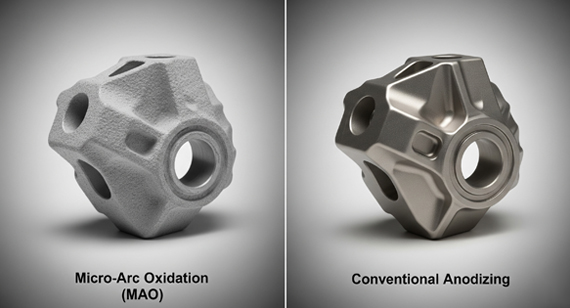
 Micro-arc oxidation (MAO) or plasma electrolytic oxidation (PEO) creates thicker, harder, and more wear-resistant ceramic coatings compared to anodizing. While anodizing is ideal for cost-effective corrosion protection, MAO offers superior durability, thermal resistance, and adhesion, making it more suitable for high-performance CNC machined parts.
66
Read more
 VMT 2025 09 05
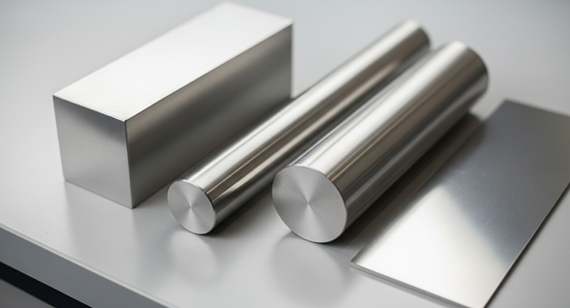
 420 SS is a grade of Stainless Steel that has good hardness, wear resistance and moderate corrosion resistance. It can be heat treated which means you can harden and temper it to get the exact strength and properties you need. It’s a customizable choice for many applications.
66
Read more
 VMT 2025 09 03
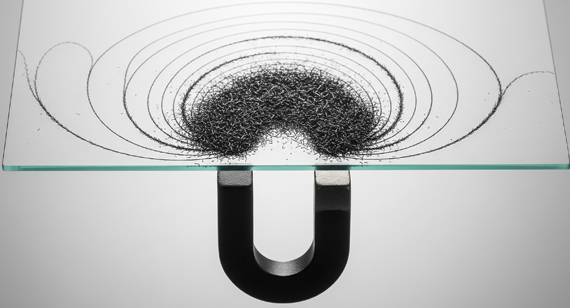
 Yes, cast iron is magnetic due to its high iron content and ferromagnetic atomic structure. However, its magnetism varies with type—gray, white, ductile, or alloyed cast iron—and environmental factors like temperature or impurities. Cast iron can attract magnets, but its strength depends on composition and processing.
66
Read more
 VMT 2025 09 02
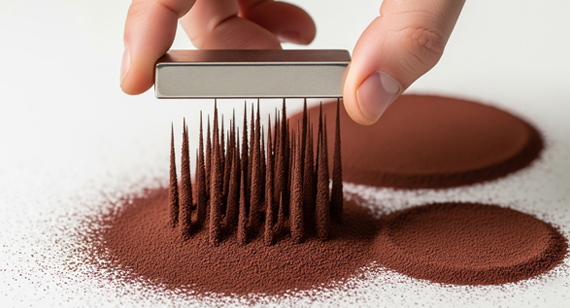
 Some iron oxides are magnetic. Magnetite (Fe₃O₄) is strongly magnetic; maghemite (γ-Fe₂O₃) is ferrimagnetic but weaker; common rust (α-Fe₂O₃ hematite) is weakly magnetic at room temperature. Knowing which oxide you have prevents contamination, measurement errors, and rework in CNC machining services and CNC machining factories.
66
Read more
 VMT 2025 08 28
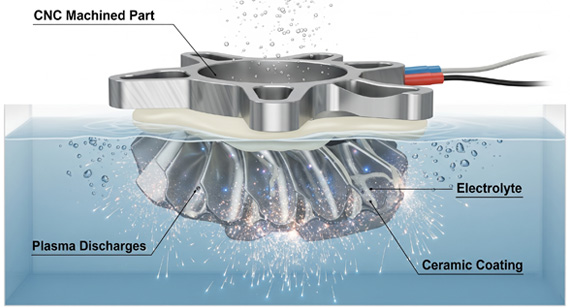
 Micro-Arc Oxidation (MAO), also called Plasma Electrolytic Oxidation (PEO), is an advanced surface treatment that uses high-voltage plasma discharges in an electrolyte bath to form a hard, ceramic-like oxide coating on metals such as aluminum, magnesium, and titanium. This process enhances hardness, corrosion resistance, and wear properties, making it ideal for CNC machined parts.
66
Read more
 VMT 2025 08 28
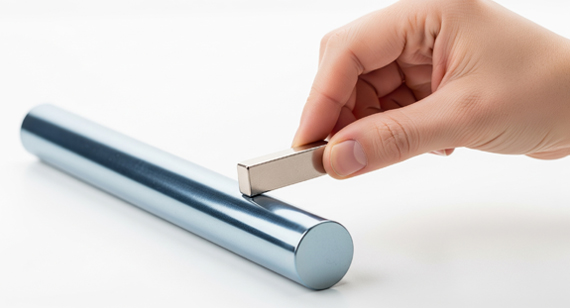
 Yes, cobalt is a ferromagnetic metal, meaning it is strongly attracted to magnets and can be magnetized itself. Its robust magnetic properties are primarily due to its electron configuration, specifically the unpaired electrons in its atomic orbitals, which create a net magnetic moment. This inherent characteristic makes cobalt a critical element in various magnetic applications, including high-performance magnets and magnetic recording media. Our cnc machining factory frequently works with materials, including magnetic alloys, that demand an intricate understanding of their properties for precision manufacturing.
66
Read more


 +86 15099911516