16 years one-stop China custom CNC machining parts factory

Hey there I’m VMT Sam!
With 25 years of CNC machining experience we are committed to helping clients overcome 10000 complex part-processing challenges all to contribute to a better life through intelligent manufacturing. Contact us now
 435 |
Published by VMT at Jan 27 2026 | Reading Time:About 2 minutes
435 |
Published by VMT at Jan 27 2026 | Reading Time:About 2 minutes


In the world of high-performance manufacturing, finding a material that balances light weight, high strength, and extreme environmental resistance is critical. 5083 Aluminum Alloy stands out as the premier choice for engineers facing the harshest conditions—from the corrosive salt sprays of the open ocean to the bone-chilling temperatures of cryogenic storage. Known as the "marine-grade" aluminum, 5083 offers structural integrity where other alloys fail.
This article provides an in-depth look at 5083 aluminum alloy, covering its chemical composition, mechanical properties, and the differences between its annealed and various cold-worked (H) tempers. We will also explore its vital role in cryogenic and marine engineering, and how VMT achieves high-precision 5083 component manufacturing through advanced CNC machining.
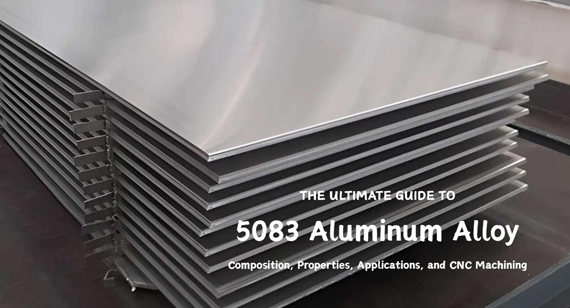
5083 aluminum is a non-heat-treatable magnesium-manganese-chromium alloy as defined by the Aluminum Association, classified under the 5xxx series. Unlike the 6xxx or 7xxx series, its strength is derived from solid solution strengthening and strain hardening rather than heat treatment. About key highlights of aluminum alloy 5083, you can find this material:
Depending on your region or industry certification, 5083 is known by several names:
Table 1: Global Equivalents of 5083 Aluminum Alloy
| Region |
Equivalent Name |
Notes |
| UNS (North America) |
A95083 | Unified Numbering System |
| ISO (International) |
AlMg4.5Mn0.7 | Based on chemical composition |
| Europe (EN) |
EN AW-5083 | EN 573-3 standard |
| USA (AA) |
AA5083 | Most common industry term |
| China (GB/T) |
5083 (formerly LF4) | Current standard GB/T 3190 |
| Germany (DIN) |
3.3547 / AlMg4.5Mn | DIN 1725 standard |
| Japan (JIS) |
A5083 | JIS H4000 standard |
5083 aluminum alloy’s performance lies in its high Magnesium (Mg) and Manganese (Mn) content, that is, Magnesium (Mg) enhances the alloy’s strength while Magnesium (Mg) enhances the alloy’s corrosion resistance and the strength.
Table 2: Chemical Composition of 5083 Aluminum Alloy
| Element |
Min (%) |
Max (%) |
Role |
| Magnesium (Mg) |
4.0 | 4.9 | Main alloying element; provides strength & corrosion resistance |
| Manganese (Mn) |
0.4 | 1.0 | Increases fatigue strength and hardness |
| Chromium (Cr) |
0.05 | 0.25 | Controls grain structure; prevents stress corrosion |
| Iron (Fe) |
- | 0.4 | Impurity control |
| Copper (Cu) |
- | 0.1 | Kept low to maintain sea-water resistance |
| Aluminum (Al) |
Balance | Balance | Base Metal |
The chemical composition of 5083 aluminum alloy is pivotal to its exceptional cryogenic performance. High Magnesium (Mg) content enhances solid-solution strength and maintains high ductility by inhibiting harmful atomic diffusion at low temperatures. Simultaneously, additions of Manganese (Mn) and Chromium (Cr) refine the grain structure, boosting fracture toughness and crack resistance. By keeping Iron (Fe) and Silicon (Si) levels low, the alloy minimizes brittle impurity phases that could otherwise act as crack initiation sites.
However, the fundamental reason 5083 aluminum does not exhibit "cold brittleness" lies in its Face-Centered Cubic (FCC) crystal structure. Unlike carbon steels (which have a Body-Centered Cubic structure), the FCC lattice allows dislocation movement to remain relatively easy even as temperatures drop, meaning there is no ductile-to-brittle transition temperature (DBTT). Consequently, 5083 aluminum displays a rare and advantageous "inverse" property: its strength and toughness both increase simultaneously at cryogenic temperatures.
As 5083 aluminum alloy is a non-heat-treatable Al-Mg alloy, its mechanical properties are primarily regulated through work-hardening and stabilization processes. The O and H111 tempers provide ultimate formability and balanced structural strength, respectively; meanwhile, H116 and H321 target the high magnesium content of 5083 (which is prone to precipitation causing corrosion) by utilizing specialized processes to optimize resistance against intergranular and exfoliation corrosion. These tempers respectively satisfy the stringent requirements for material durability and service safety in marine anti-corrosion applications and cryogenic engineering (LNG). The mechanical property data for these four states are typical and representative. The following table displays the mechanical property data for 5083 aluminum alloy in O, H111, H116, and H321 tempers:
Table 3: 5083 Aluminum Alloy Mechanical Properties by Temper
| Temper |
Tensile Strength (MPa) |
Yield Strength (0.2% MPa) |
Elongation (%) |
Hardness (HBW) |
Typical Use |
| O (Annealed) |
275 – 350 | 125 – 150 | 16 – 22 | 65 | LNG Tank Liners (High ductility) |
| H111 |
270 – 345 | 115 – 215 | 12 – 15 | 75 | Marine hulls & general structures |
| H116 |
305 – 385 | 215 – 228 | 10 – 15 | 90 | Marine Optimized (Anti-corrosion) |
| H321 |
305 – 385 | 215 – 228 | 12 – 16 | 90 | Cryogenic & high-strength marine parts |
The O (Annealed) temper of 5083 Aluminum Alloy represents the material in its softest state with maximum ductility, making it the most suitable choice for cold bending, stamping, and deep drawing processes.
In contrast, the H111 temper has undergone slight work-hardening to achieve a higher strength than the O state while still retaining excellent plasticity; it is ideal for conventional bending, roll forming, and welded structures, and is frequently used in marine hulls and general structural components.
Specifically optimized for marine environments, the H116 temper offers superior resistance to intergranular and exfoliation corrosion, making 5083-H116 an ideal material for welding and cutting. Although its higher strength requires greater force during processing, it is perfectly suited for marine hull plating.
Lastly, the H321 temper provides performance similar to H116 but includes a stabilization treatment that ensures strength stability in low-temperature environments. Consequently, 5083-H321 exhibits excellent machinability and cryogenic welding characteristics, leading to its widespread use in cryogenic engineering and high-strength marine components.
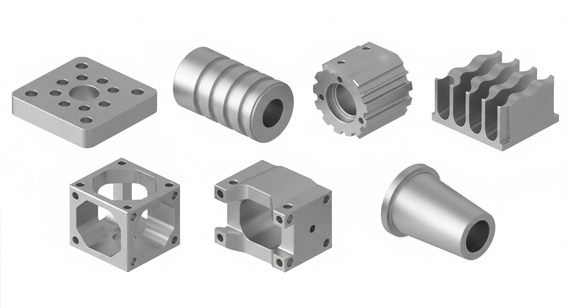
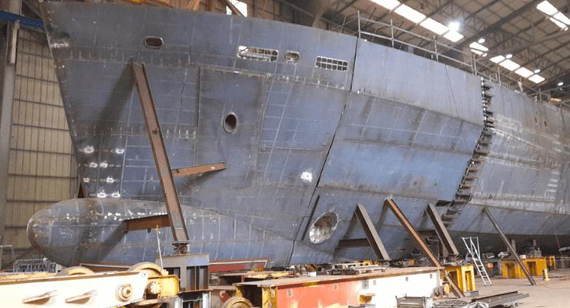
5083 aluminum is utilized in the form of plates, bars, and foils across diverse sectors, just one point you may keep in mind is that the applications are must on products operating within ambient temperatures (below 65°C):
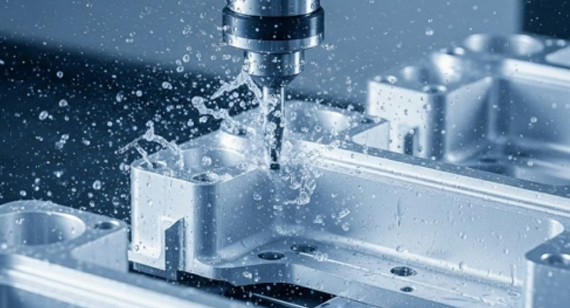
Can 5083 aluminum be CNC machined? Absolutely. While it is slightly more challenging than 6061 aluminum due to its high toughness, tendency to stick to the tool (built-up edge), and work-hardening properties, it is more highly valued for precision parts in corrosive environments than other alloys, including 6061. Furthermore, 5083 exhibits lower internal stress when machining large structural components, which ensures superior dimensional stability and prevents the finished parts from warping or deforming.
CNC Machining Advantages for Manufacturing 5083 Aluminum
CNC machining is a subtractive manufacturing process that utilizes computerized controls and high-speed rotating cutting tools to precisely remove material from a solid block of metal. For 5083 aluminum, CNC machining offers several benefits include:
Machining Characteristics of 5083 Aluminum Alloy
5083 aluminum alloy is the backbone of the marine and cryogenic industries. Its unique blend of weldability and extreme environmental resilience makes it a premium choice for high-stakes engineering. When paired with expert CNC machining, it delivers performance that few other metals can match.

A client in the offshore renewable energy sector required a complex Valve Housing(5083 aluminum alloy) for an underwater sensor system. The part would be submerged in seawater for 10+ years. And a flat tolerance of 0.02mm over a 300mm surface was required.
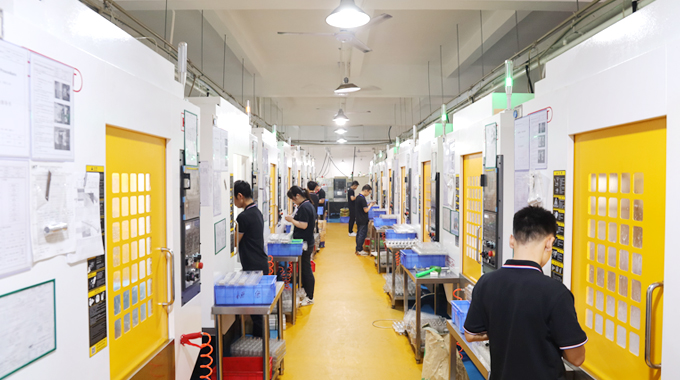
Another factor is that traditional 5083 machining often leads to "burrs" and surface finish inconsistencies due to the alloy's ductility. VMT CNC Machining Factory provide solutions for these issues that:
VMT Experts’ professional solution caused optimal results:
Is 5083 aluminum stronger than 6061 aluminum?
It depends on the condition, but generally, 5083 is stronger than 6061 in its as-welded state. While 6061-T6 has a higher peak yield strength (approx. 240-270 MPa), it loses significant strength during welding. In contrast, 5083 maintains its high mechanical properties (approx. 215-230 MPa) after welding and offers superior fatigue strength and corrosion resistance.
Why is aluminum alloy 5083 often used for LNG tanks?
Because it does not undergo a "ductile-to-brittle transition." While most metals become brittle and crack at sub-zero temperatures, 5083 aluminum actually increases in strength at -195°C without losing its toughness.
What is the difference between 5083-H116 and H321?
Both are designed for marine use to prevent corrosion. The difference lies in the processing: H116 is optimized for exfoliation corrosion resistance, while H321 is stabilized to ensure consistent mechanical properties in high-stress applications.
Can 5083 aluminum be anodized?
Yes, but with caveats. While it can be protective-anodized, the high magnesium content can result in a darker, more grayish finish compared to the bright finish of 6061 or 6063.
How well does 5083 aluminum weld?
Excellent. It is one of the most weldable aluminum alloys. When using 5183 or 5356 filler wire, the welded joints retain almost all the strength of the original base metal.
Can 5083 be used for high-temperature engine parts?
No. It should not be used in environments exceeding 65°C (149°F). Continuous exposure to heat causes magnesium to precipitate at the grain boundaries, making the part highly susceptible to cracking. For high-temp applications, 2xxx or 6xxx series are better choices.


 +86 15099911516




 Read more