16 years one-stop China custom CNC machining parts factory

Hey there I’m VMT Sam!
With 25 years of CNC machining experience we are committed to helping clients overcome 10000 complex part-processing challenges all to contribute to a better life through intelligent manufacturing. Contact us now
 278 |
Published by VMT at Mar 28 2026 | Reading Time:About 2 minutes
278 |
Published by VMT at Mar 28 2026 | Reading Time:About 2 minutes


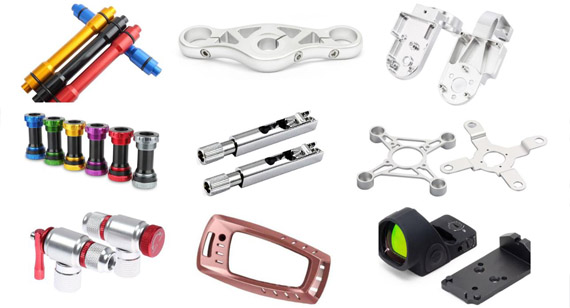
Aluminum 6061 structural alloy—— you can consider it as the most widely used for light-weight structural products like:
For all above parts, you can produce via CNC machining, usually machine the 6061-T6 or 6061-T651 to gain the highest strength(t6) or high strength yet better dimensional stability.
When we say “stress relieving 6061 aluminum” is actually through a stretching marked as “51” —— to reduce the internal stress of 6061-t6 aluminum, which has the highest strength but also potential to crack if you cut, drill, mill, or turn it.
Here is a process flow which shows how t6 and t651 are achieve:
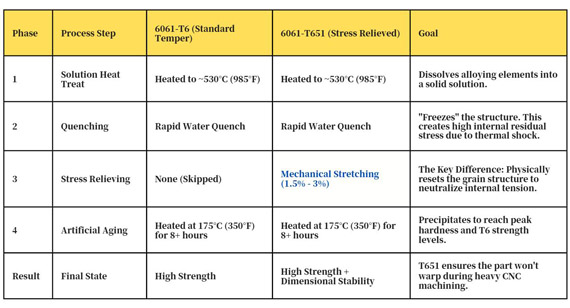
Apparently, the mechanical stretching is what makes aluminum t6 not that easy to warp when CNC machining.
It’s a common myth that stress-relieving aluminum sacrifices its strength. But stretching process for T651 happens before the final aging stage, the metal retains its full T6 hardness while gaining the dimensional stability.
(Strength 6061 aluminum is gain by the heat treatment aging process, or you can see it as “precipitation hardening”)
Aluminum 6061 T6 VS T651
| Property |
6061-T6 |
6061-T651 |
Notes |
| Tensile Strength |
310 MPa (45 ksi) | 310 MPa (45 ksi) | No Difference |
| Yield Strength |
276 MPa (40 ksi) | 276 MPa (40 ksi) | No Difference |
| Hardness (Brinell) |
95 HB | 95 HB | No Difference |
| Internal Residual Stress |
Extremely High (Prone to warping) | Extremely Low (Highly stable) | T651 Wins |
| Machinability Rating |
50% ( B1112 free cutting steel as the 100% baseline) | 50% | Seems the same, but not the same stability |
| Machining Stability |
Moderate (Risk of warping) | Exceptional (Stress-relieved) | T651 Wins |
By choosing stress-relieved 6061-T651, you ensure that the 6061 aluminum stays "metal stable" during and after the machining process, allowing for tighter tolerances and more complex geometries.
The Importance of Machining Stability for 6061 Aluminum
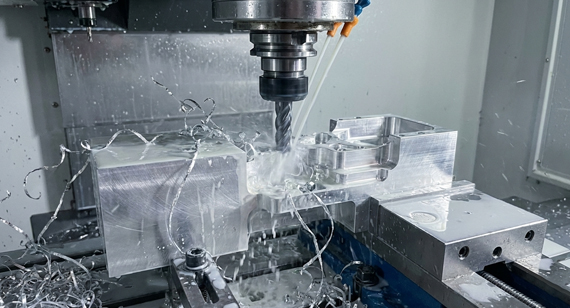
For high-precision 6061 aluminum CNC Machined parts, like drone gimbals or optical sensors, dimensional stability is non-negotiable during CNC machining.
Benefit of Stress-Relieved Aluminum (T651):
Does Cost Change: CNC Machining 6061 from T6 to T651?
While the raw material for T651 costs more (because of one more mechanical stretching process), the reduced machining time and zero scrap rate usually make T651 the more cost-effective choice for precision components (less machining time causes lower cost).
Cost Factor Comparison T6 vs T651
| Cost Factor |
Comparison: T6 vs. T651 |
Impact on Final Price |
| Material Cost |
T651 is usually 10%–15% more expensive than T6. | Slightly Higher Initial Price |
| Machining Speed |
T6 may require slower passes to prevent heat/stress buildup. | T651 allows for faster, more aggressive CNC milling. Less Machining Time Cause Lower Cost. |
| Scrap Rate |
Potential risk of rejected parts due to slightly warping in T6. | T651 significantly reduces scrap and rework costs. |
Is T6 or T651 Best Suited for Your Needs?
This selection is based on your requirements for parts’ performance.
You are producing simple, thick blocks, or parts where dimensional precision is not critical (e.g., simple brackets or heavy structural bases). No ask for high precision will not cause too many rejected parts while 6061-T6 is enough and economical.
Your design features thin walls, deep pockets, or requires high-precision tolerances (+/- 0.01mm) where warping would fail the part. T651 is the best for its high-dimensional precision.
Are you struggling with warping issues or tight tolerances in your 6061 aluminum projects?
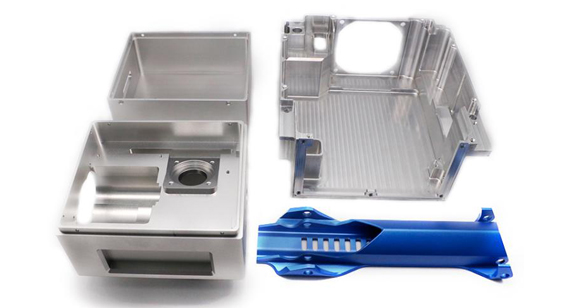
At VMT CNC Machining Factory, we provide high-performance manufacturing solutions tailored to your specific engineering goals. Our engineers analyze your design to determine where 6061-T6 is sufficient for structural needs and where 6061-T651 is non-negotiable for precision, ensuring you never overpay for material you don't need.

What is the allowable stress for 6061 aluminum?
For 6061-T6, the allowable design stress is typically around 124 MPa (18 ksi) for building structures, depending on the safety factor used in specific engineering codes (like the Aluminum Design Manual).
Can you stress relieve aluminum in other ways?
Yes, besides mechanical stretching (T651), stress can be relieved through "Uphill Quenching" (thermal shock) or vibratory stress relief, though mechanical stretching remains the most effective for plate stock.
What's stronger, 7075 or 6061?
7075 aluminum is significantly stronger. While 6061 aluminum is used for general structural parts, 7075 aluminum is an aerospace-grade alloy used in high-stress applications like aircraft landing gear. 6061 aluminum is preferred for its superior corrosion resistance and weldability.
What is the ultimate compressive strength of 6061?
For 6061-T6, the ultimate compressive strength is approximately equal to its tensile strength, around 310 MPa (45 ksi).
What does the T stand for in 6061-T6?
The "T" stands for Thermally Treated. It indicates the material has been heat-treated to produce stable tempers. The "6" specifically refers to solution heat-treatment followed by artificial aging.
Which is stronger, 5052 or 6061?
6061 aluminum is stronger. 5052 aluminum is a non-heat-treatable alloy known for excellent formability and salt-water resistance, but it cannot match the hardness and tensile strength of 6061-T6.
Does all aluminum relieve stress by “51” stretching?
No. The "51" suffix specifically refers to stress relief by controlled stretching. Other methods exist, such as "52" (stress-relieved by compressing), but "51" is the standard for 6061 plates and extrusions.


 +86 15099911516




 Read more