16 years one-stop China custom CNC machining parts factory

Hey there I’m VMT Sam!
With 25 years of CNC machining experience we are committed to helping clients overcome 10000 complex part-processing challenges all to contribute to a better life through intelligent manufacturing. Contact us now
 478 |
Published by VMT at Nov 19 2025 | Reading Time:About 2 minutes
478 |
Published by VMT at Nov 19 2025 | Reading Time:About 2 minutes


If a common alloy material, aluminum alloy with silicon(Si)addition, happens to be used in your engineering project, you surely understand that the additon of silicon(Si) must be enhancing certain properties of the aluminum alloy. But maybe you will be wondering—what does the silicon(Si)belongs to ? Metal or nonmetal?
This article will illustrate elements like silicon(Si)—the metalloids, and their properties and applications. After learning about how metalloids play an important role in industries, there might be some useful references provided for your material selection and application design.

Metalloids are a class of elements whose properties lie between those of metals and nonmetals , which have a metallic luster but are relatively brittle.
Metalloids exhibit a dual nature physically and chemically, combining metallic and nonmetallic characteristics. Physically, they typically possess a balance of semiconductor properties, moderate strength, and good adaptability. Chemically, they can gain or lose electrons and react with both acids and bases.
This dual nature makes metalloids irreplaceable in fields such as alloy manufacturing, semiconductors, and chemistry etc.
Common metalloids include boron (B), silicon (Si), germanium (Ge), arsenic (As), antimony (Sb), tellurium (Te), polonium (Po), and astatine (At).
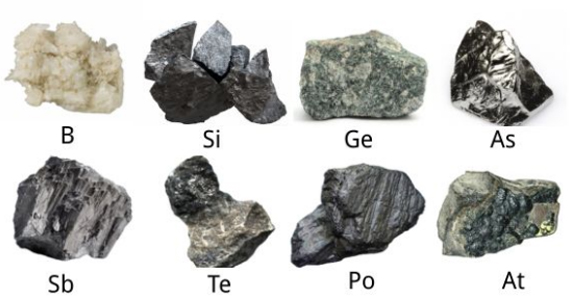
Table 1: Physical and Chemical Properties of Common Metalloids
| Element |
Stable Isotopes |
Density (g/cm³) |
Melting Point (°C) |
Oxidizing Property |
Reducing Property |
Uses |
| Boron (B) |
¹⁰B, ¹¹B |
~2.34 |
~2076 |
Can be oxidized |
Certain reduced ability |
Used to strengthen structural components of automobiles. |
| Silicon (Si) |
²⁸Si, ²⁹Si, ³⁰Si |
~2.33 |
~1414 |
Yes |
Certain |
Most common semiconductor materials. |
| Germanium(Ge) |
⁷⁰Ge, ⁷²Ge, ⁷³Ge, ⁷⁴Ge, ⁷⁶Ge |
~5.32 |
~938 |
Yes |
Slightly |
Commonly used in semiconductors. |
| Arsenic (As) |
⁷⁵As |
~5.73 |
~1071 |
Easily |
Easily |
Commonly used as an insecticide. |
| Antimony (Sb) |
¹²¹Sb, ¹²³Sb |
~6.68 |
~630 |
Easily |
Easily |
Used for coloring pigments, often alloyed with lead. |
| Tellurium (Te) |
¹²⁰Te, ¹²²Te, ¹²³Te, ¹²⁴Te, ¹²⁵Te, ¹²⁶Te, ¹²⁸Te, ¹³⁰Te |
~6.24 |
~449 |
Acts as an oxidizing agent |
Slightly |
Used as an additive for steel to improve its machinability. |
| Polonium (Po) |
None |
~9.1–9.4 |
~254 |
Certain |
— |
Highly radioactive; used as a power source for space probes. |
| Astatine (At) |
None |
~7.2 |
~300 |
Strong |
Loses electrons easily (weak reducing ability) |
A radioactive element that currently has no applications other than research laboratories. |
It’s worth noting that there’re currently some controversies about Polonium (Po) and astatine (At) .
Polonium (Po) is sometimes considered a metal because it shows some characteristics of a metal. Like, it tends to form cations in aqueous solutions, and its electrical conductivity decreases with increasing temperature.
Astatine (At) is sometimes considered a nonmetal. Astatine (At) is located in Group 17 of the halogens, while the other elements in that group are nonmetals.
The main properties of metalloids can be explored from both physical and chemical perspectives.
Physical Properties of Metalloids
Metalloids typically possess physical properties that fall between those of metals and nonmetals, which I will refer to as “moderate” .
1.Electrical Conductivity
Moderate. The electrical conductivity of metalloids (usually the semiconductors) increases with increasing temperature (free electron flow is increased ). This is something metals cannot do; metals impede free electron flow as temperature rises. This unique conductivity property makes them (such as semiconductor silicon (Si)) uniquely suited for electronic device and chip manufacturing.
2.Temperature Conductivity
Moderate. Boron (B) and silicon (Si) are examples of metalloids with relatively good thermal conductivity, suitable for high-performance electronic products.
3.Mechanical Properties
The hardness of metalloids is moderate. But metalloids don’t have ductility, toughness, and elasticity. So, metalloids are unsuitable for structural applications in construction, machinery, etc.
4.Boiling and Melting Points
Moderate. It is worth noting that the boiling and melting points of metalloids are not lower than all the metals. The boiling and melting points of metalloids depend on their atomic structure, particularly their tendency to form covalent network structures (atomic structures connected by strong covalent bonds to form a three-dimensional network).
These three-dimensional network structures possess strong covalent bonds, requiring much energy to break. So, the melting and boiling points of metalloids are higher than those of some common metals (such as aluminum and copper).
5.Density
Moderate. The density of metalloids increases with increasing atomic number.
6.Allotropes
Allotropy is very common in metalloids (except for polonium (Po) and astatine (At)), exhibiting different physical properties in different forms. It reflects their mixed-type characteristics between metals and nonmetals.
Chemical Properties of Metalloids
Metalloids exhibit chemical behavior intermediate between metals and nonmetals, possessing dual characteristics, but they generally behave more like nonmetals in chemical reactions.
1.Reactivity with Nonmetals
Metalloids react with strong oxidizing agents, exhibiting reducing properties (losing electrons). They react with strong reducing agents, exhibiting oxidizing properties (gaining electrons). In metallurgy, corrosion, electrochemistry, and catalysis, this "electron gain/loss" controls the direction of the reaction.
2.Reacted As Additive Elements
Metalloids are often added as additive elements to metals or alloys, influencing the crystal structure during chemical reactions or alloy formation, thereby enhancing or transitioning the properties of the metal (e.g., hardness, stability, or conductivity).
3.Reaction with Acids and Bases
Metalloids can react with both acids and bases, possessing good chemical adaptability. For example, metalloid oxides are amphoteric oxides, reacting with acids and bases respectively to produce salts and water. Some metalloids can also react under strong acid or strong base conditions.
1.Aerospace Components
2.Solar Panels
Tellerium (Te) is added to cadmium compounds to form cadmium telluride (CdTe). Its low thermal conductivity and suitable band gap (approximately 1.5 eV) reduce heat conduction losses in cells, making it suitable for high-efficiency solar panels.
3.Thermoelectric Conversion Equipment
Tellerium (Te) is added to bismuth compounds to form bismuth telluride (Bi₂Te₃). Its low thermal conductivity and high electrical conductivity make it an ideal material for thermoelectric conversion equipment.
4.Ammunition Manufacturing and Mechanical Components
Antimony (Sb) is combined with lead to form antimony-lead alloys, improving material hardness and wear resistance, used in ammunition manufacturing and mechanical components.
Glass
1.Ordinary Glass
Silicon (Si) forms silicon dioxide (SiO₂), the main raw material for glass.
2.Borosilicate Glass
Boron (B) forms borosilicate glass, reducing the coefficient of thermal expansion, used in laboratory instruments, heat-resistant cookware, and architectural glass.
3.Optical Glass
Silicon (Si) is used in its compound form to prepare silicone rubber, sealants, lubricants and insulating materials. It has excellent heat resistance and chemical stability and is often used in cookware and electronic sealing components.
Flame Retardant Materials
Antimony (Sb) provides flame retardancy and is used in industrial machinery, construction, textiles, plastics, and wire coatings. Antimony (Sb) is also commonly added as a flame retardant to molded plastics.
Pyrotechnic Uses
Medical Uses
1.Equipment
2.Therapeutic and Pharmaceutical Uses
3.Medical Chemicals
Antimony (Sb) has medicinal properties and can be used as a preservative or oral antifoaming agent.
Agricultural Uses
What is the difference between metals and metalloids?
Metals are generally hard, malleable, and conduct electricity and heat faster; metalloids are brittle, not malleable, and have moderate electrical and thermal conductivity.
Are metalloids used in solar panels?
Besides tellurium (Te), silicon and germanium are also widely used in solar panels.
Which metalloid is most abundant?
Silicon dioxide (SiO₂) and silicate minerals, formed from silicon, are widely found in nature, such as sand and gravel.
This article discussed metalloids as well as their physical and chemical properties and applications. If you want to learn more on the application of metalloids in alloys, and how to use metalloids to enhance the performance of alloy materials and benefit you, contact a VMT expert today for assistance.
As a CNC machining factory, VMT is committed to providing high-precision custom CNC machining alloy parts for various industries. With professional knowledge, advanced CNC equipment, a strict quality control system, and exquisite surface treatment processes, we can meet all your prototype design and production needs. Contact VMT to require a free consult or quote, we provide 24/7 service.


 +86 15099911516




 Read more