
16 years one-stop China custom CNC machining parts factory
The VMT blog is dedicated to sharing our hard-earned knowledge in prototype manufacturing. We hope these articles will help you optimize your product designs and gain deeper insight into the world of rapid prototyping. Enjoy the read!
Get an Instant Quote All uploads files are safe and confidential
 VMT
VMT  2025 10 28
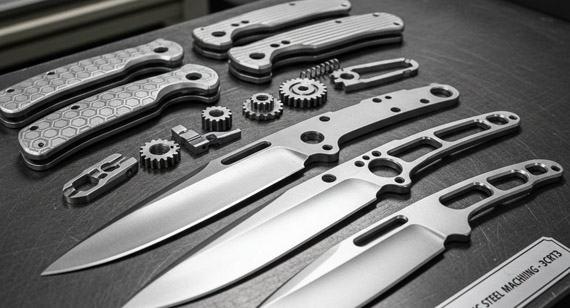
 3CR13 steel knives offer excellent value for budget-friendly applications, providing good corrosion resistance and machinability for 3CR13 knife manufacturing, making its 3CR13 knife suitability high for utility and kitchen blades with proper heat treatment.
 66
66
 Read more
 VMT 2025 10 27
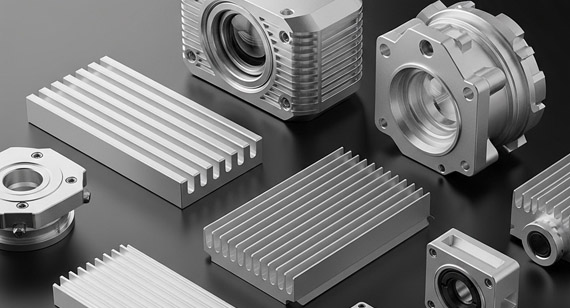
 The article delves into the critical role of aluminum die-casting and CNC machining for high-performance lighting components. It highlights key advantages such as superior thermal management for LEDs, tight precision, enhanced durability, and design freedom, alongside cost-effectiveness for mass production. Discussed are various applications, the integrated manufacturing process, and our factory's commitment to quality, technical expertise, and transparent partnership for streamlined supply chains.
66
Read more
 VMT 2025 10 25
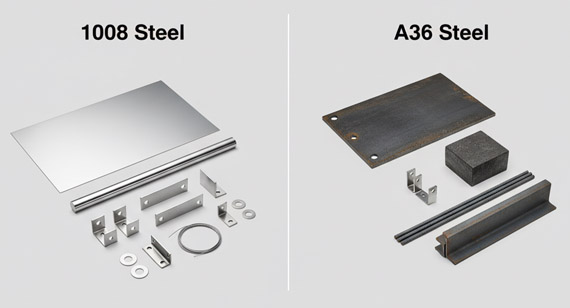
 The difference between 1008 steel and A36 steel lies mainly in their chemical composition and strength. 1008 steel is a low-carbon steel with excellent formability and ductility, ideal for deep drawing and cold forming. A36 steel, on the other hand, has higher carbon content and strength, making it suitable for structural and general fabrication applications.
66
Read more
 VMT 2025 10 24
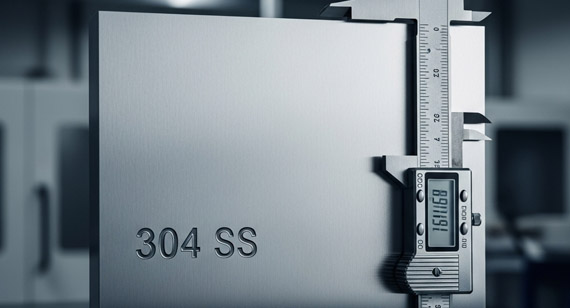
 This article clarifies the common misconception that 304 stainless steel and 16-gauge are comparable. It distinguishes material grade (304 SS) by its chemical composition and properties like corrosion resistance, from physical gauge (16-gauge) which denotes thickness and structural impact. Emphasizing that both are critical but serve different functions, it advocates for contextual selection to optimize performance, longevity, and cost. VMT's expertise ensures clients make informed decisions, preventing costly errors and guaranteeing high-quality CNC machined parts.
66
Read more
 VMT 2025 10 23
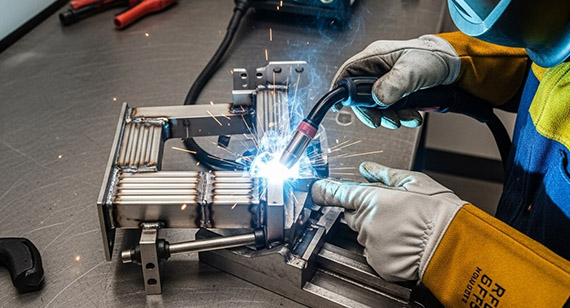
 Achieving high-quality stainless steel welds necessitates meticulous attention to material preparation, including grade identification and thorough cleaning. Optimal welding parameters, precise process selection, and careful interpass temperature management are critical for controlling heat input and preventing defects like sensitization. Selecting the correct filler metal, matching base material, and ensuring proper storage are also paramount. Mastering heat control mitigates distortion and preserves the Heat-Affected Zone's integrity. Effective shielding gas and back purging are indispensable for preventing atmospheric contamination. Post-weld care, encompassing mechanical and chemical cleaning and passivation, restores corrosion resistance. Finally, rigorous quality assurance through visual, non-destructive, and metallurgical testing guarantees component reliability.
66
Read more
 VMT 2025 10 22
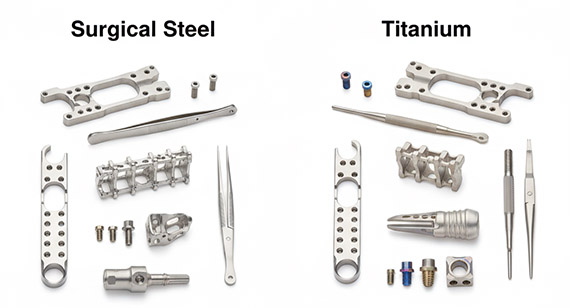
 This guide meticulously compared medical-grade surgical steel and titanium alloys, delving into their distinct properties, applications, and manufacturing considerations for critical components. We examined their biocompatibility, corrosion resistance, strength-to-weight ratios, and machinability, emphasizing that optimal material selection hinges entirely on specific project requirements and regulatory compliance. VMT's expertise in surgical steel and titanium CNC machining services was highlighted as a crucial resource for achieving high-precision, reliable results.
66
Read more
 VMT 2025 10 21
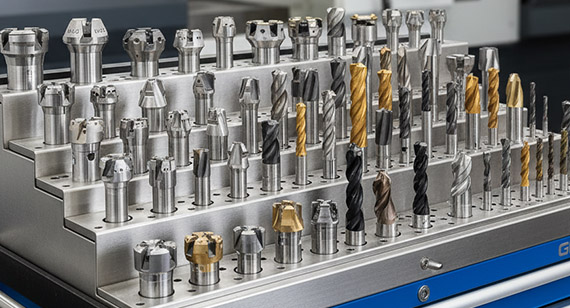
 CNC machining tools are specialized instruments used to cut, shape, and finish materials in automated CNC machines. They include cutting tools like end mills, drills, and reamers, as well as non-cutting tools such as tool holders and jigs. Selecting the right tool type and material ensures precision, efficiency, and long tool life.
66
Read more
 VMT 2025 10 20
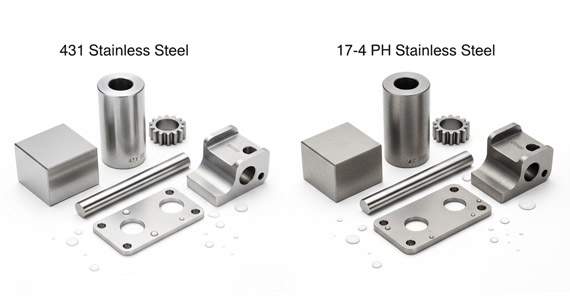
 For engineers and procurement professionals grappling with material specification, understanding the fundamental divergence between 431 and 17-4 PH stainless alloys is indispensable. While both offer impressive attributes, their distinct compositions and subsequent thermal responses dictate markedly dissimilar performance profiles in various demanding environments, directly influencing component longevity and operational reliability.
66
Read more


 +86 15099911516