16 years one-stop China custom CNC machining parts factory

Hey there I’m VMT Sam!
With 25 years of CNC machining experience we are committed to helping clients overcome 10000 complex part-processing challenges all to contribute to a better life through intelligent manufacturing. Contact us now
 90 |
Published by VMT at May 20 2026 | Reading Time:About 2 minutes
90 |
Published by VMT at May 20 2026 | Reading Time:About 2 minutes


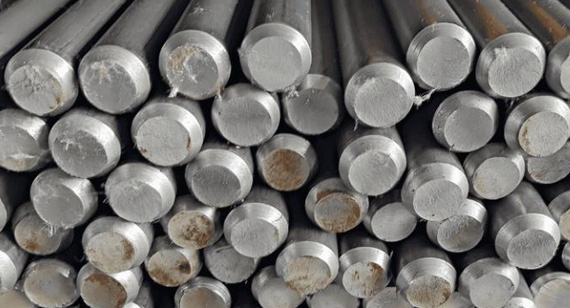
Although both high carbon steel 1075 and 1095 can be called “spring steel,” they do not possess the same properties. Would you prefer the higher impact resistance of AISI 1075 steel, or the higher hardness and wear resistance of AISI 1095 steel? But it is not as simple as this impression; you should pay attention to their detailed differences in composition, mechanical properties, and machinability—which is closely related to machining cost—and applications. Understanding these can help you make a more economical or durable choice. At the very end, we will also share a case study of how we suggested to our clients the suitable one for their custom drive sprockets with performance and assembly requirements.
While both belong to the same family, the slight shift in carbon levels creates a notable divide in how they behave under stress.
Chemical Composition Comparison: 1075 steel vs 1095
| Element |
AISI 1075 |
AISI 1095 |
| Carbon (C) |
0.70%–0.80% | 0.90%–1.03% |
| Manganese (Mn) |
0.40%–0.70% | 0.30%–0.50% |
| Phosphorus (P) |
≤0.040% | ≤0.040% |
| Sulfur (S) |
≤0.050% | ≤0.050% |
| Iron (Fe) |
Balance | Balance |
As you can see from the table, AISI 1095 has a carbon content approaching 1.0%. This higher concentration leads to the formation of a greater volume of carbides within the steel. These carbides are incredibly hard particles, increasing the 1095's overall hardness and its ability to resist abrasive wear. However, this also means it is inherently more brittle than 1075. Therefore, if you are designing a part that needs to withstand high torque or unexpected impacts after assembly, you might consider whether to switch to the more resilient 1075.
The trade-off between strength and durability is a critical factor in mechanical design, especially when it comes to 1075 carbon steel vs 1095. Below is a clear table for 1075 steel vs 1095 steel’s key mechanical properties:
Mechanical Properties Comparison:1075 steel vs 1095
| Property |
AISI 1075 |
AISI 1095 |
| Rockwell Hardness (HRC) |
50–55 (Typical) | 55–62 (Typical) |
| Wear Resistance |
Good | Better |
| Tensile Strength |
~900 - 1050 MPa | ~1200 - 1350 MPa |
| Yield Strength |
~600 - 750 MPa | ~800 - 950 MPa |
| Charpy V-Notch |
25–35 Joules | 4–10 Joules |
| Impact Toughness |
High | Low to Moderate |
| Fatigue Strength (@ 107cycles) |
~480 MPa | ~410 MPa |
| Fatigue Resistance |
Superior | Moderate |
If your custom parts—such as bearing sleeves, brackets, or support components—are subjected to cyclic stress (repeated loading and unloading), you must prioritize Fatigue Life. AISI 1075, with its excellent fatigue resistance, offers much higher durability for parts that move or vibrate. While 1095 provides a sharper edge or better wear resistance, 1075 ensures your product won't develop premature cracks under the strain of constant use.
When it comes to custom manufacturing, the material cost is one part of the equation—steel 1095 is more expensive than 1075 because of higher carbon content, and higher carbon makes steel more complicated to be produced. The total cost also comes from CNC machining cost and post-processing reliability.
1.Comparison: Machinability Rating (AISI 1212 = 100%)
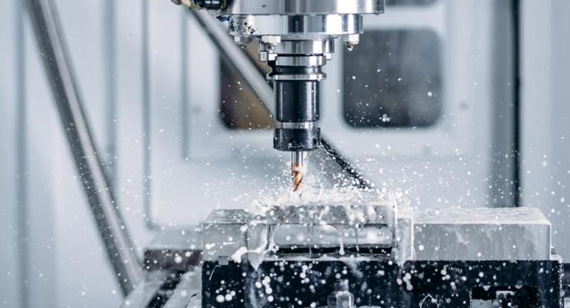
AISI 1095 causes faster tool wear compared to 1075. During the precision CNC process, the high carbon content of 1095 means your partner factory will need:
If you are looking for shortened lead times and strict cost control, AISI 1075 is typically a more cost-effective choice.
2. About Post-Processing Reliability
It is important to remember that completing the CNC machining stage does not mean the part is finished. These steels are typically machined in an annealed state (a relatively low-hardness state). Once the shape is formed, the parts must undergo heat treatment to achieve their final required strength and hardness.
This is where the quench cracking risk of 1095 becomes a major concern:
Therefore, you should think carefully before selecting 1095 for precision-engineered components. Unless the absolute maximum hardness is 1095’ advantage, AISI 1075 offers a safer solution with lower risks of scrap and failure during the post-processing stages.
1.When to Choose AISI 1075: for its "Elasticity and Impact Resistance"
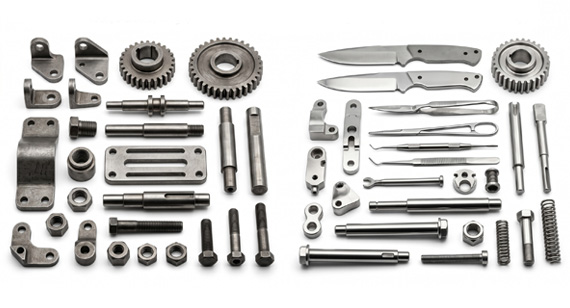
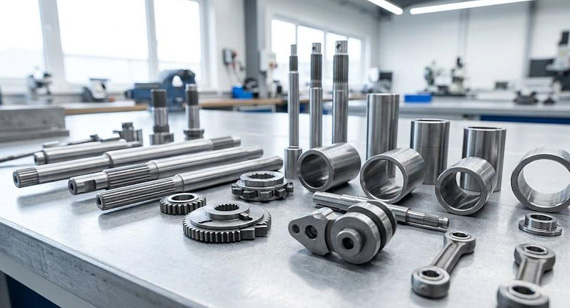
AISI 1075 is the preferred choice for assembly components that require springiness and the ability to survive sudden shocks without snapping. Its superior fatigue life makes it ideal for parts that undergo constant movement, such as:
2. When to Choose AISI 1095: for its "Extreme Wear and Sharp Edges"
AISI 1095 is designed for parts where "extreme wear resistance" and the ability to hold a "razor-sharp edge" are the top priorities. For example,
A client approached VMT with a requirement for custom drive sprockets designed for high-speed automated equipment. The application demanded: the sprocket teeth needed exceptional wear resistance, while the component as a whole had to withstand the high-torque impact of frequent start-stop cycles. Initially, the client specified AISI 1095 steel, aiming for maximum hardness.
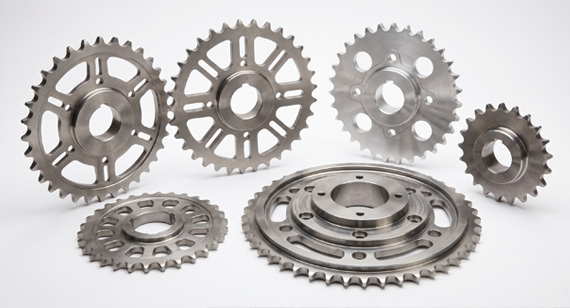
During our DFM analysis, VMT engineers identified a significant risk: the high carbon content of 1095 makes it prone to quench cracking, especially around the high-stress shaft bore. We suggested a strategic pivot to AISI 1075 steel. During the CNC machining phase, we utilized 1075's relatively good machinability to maintain tight tolerances (±0.01 mm), followed by controlled heat treatment to ensure the teeth met the required hardness (at least 50 HRC) while the core remained resilient.
The use of 1075 successfully solved the micro-cracking issues at the shaft bore that are often caused by 1095. Not only did the 1075 sprockets meet all assembly requirements for durability and shock resistance, but the improved machinability also resulted in a 12% reduction in per-unit machining costs due to faster production cycles and less tool wear.
This guide has explored the critical trade-offs between AISI 1075 and 1095 carbon steel, from their chemical compositions to their mechanical performance, cost in CNC machining and applications. Choosing the one from AISI 1075 or 1095 carbon steel is about balancing hardness and durability, impact resistance and fatigue life, manufacturing costs and post-processing consideration.
Are you still unsure whether 1075 or 1095 is the right fit for your specific design? Send us your CAD drawings please, and our engineering team will provide you with a comprehensive DFM analysis and optimized solution—from material selection to manufacturing solution to final post-processing—tailored to your project’s success.

What is the best alternative if my part thickness exceeds 20mm?
If your part is thicker than 20mm, 1075 may suffer from poor "hardenability" (the core won't harden fully). In this case, we recommend switching to AISI 4140 alloy steel, which contains chromium and molybdenum to ensure a consistent through-hardened core.
Which steel should I use if I require zero-dimensional distortion after heat treatment?
Neither 1075 nor 1095 is ideal for zero-distortion requirements as they require oil quenching. For high-precision parts where dimensions must remain perfect, we recommend D2 tool steel, an air-hardening steel known for its exceptional dimensional stability during heat treatment.
Which steel is easier to heat treat, 1075 or 1095?
AISI 1075 is generally easier to heat treat because its slightly lower carbon content reduces the risk of quench cracking. AISI 1095 requires much stricter temperature control and specialized quenching media to avoid micro-cracks and brittleness.
Is 1075 steel considered "spring steel"?
Yes, 1075 is one of the most popular "spring steels" due to its excellent yield strength and elasticity. It is widely used for clips, leaf springs, and any component that needs to return to its original shape after bending.
Can I use 1095 for thin precision shims?
Absolutely. In fact, 1095 is excellent for thin, static parts like shims and spacers because its high hardness ensures they do not compress or deform under heavy pressure, provided they aren't subjected to heavy impact.
How do 1075 and 1095 compare in corrosion resistance?
Both are plain high-carbon steels and offer very poor corrosion resistance. Without a secondary coating—such as black oxide, plating, or regular oiling—both will rust quickly when exposed to moisture or oxygen.
The technical information and manufacturing advice shared on the VMT website are for general guidance only. While we strive for accuracy, VMT does not guarantee that the processes, tolerances, or material properties mentioned are applicable to every specific project. Any reliance you place on such information is strictly at your own risk. It is the buyer's responsibility to provide definitive engineering specifications for any production orders. Final specifications and service terms shall be subject to the formal contract or quotation confirmed by both parties.


 +86 15099911516




 Read more