16 years one-stop China custom CNC machining parts factory

Hey there I’m VMT Sam!
With 25 years of CNC machining experience we are committed to helping clients overcome 10000 complex part-processing challenges all to contribute to a better life through intelligent manufacturing. Contact us now
 270 |
Published by VMT at May 21 2026 | Reading Time:About 3 minutes
270 |
Published by VMT at May 21 2026 | Reading Time:About 3 minutes


If you want the most typical “sanitary” or “hygienic” stainless steel, then it must include stainless steel 304(18/8), 316 and 316L, 430.
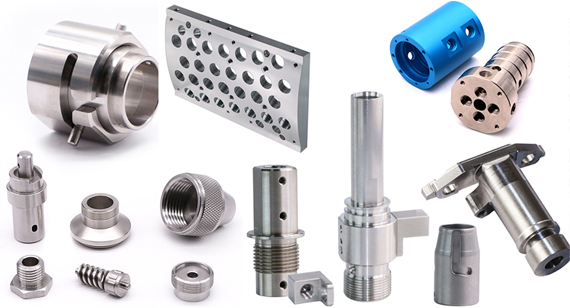
These are not only what you can see in kitchens, such as stainless steel knives, plates, sinks, or various containers, which are mostly made by the stamping process. They also play important roles in many precision machinery uses such as CNC machined pharmaceutical equipment parts (e.g. sampling valves), CNC coffee machine parts(e.g. coffee tamper bases and dispensers), and CNC food equipment parts(e.g. filling nozzles), etc.
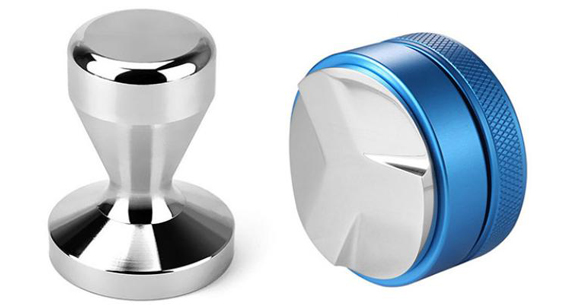
This blog will introduce the corrosion resistance degrees, typical applications for CNC machining, and the machining cost of these food-grade stainless steels. At the very end, we will also share a case study of how we suggested and processed the right stainless steel based on the parts’ use environments, surface finish, and budget requirements from our clients.
Well, almost 30–40% of stainless steel components are made of 304!
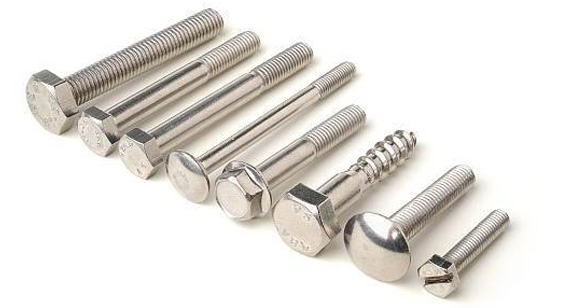
Stainless steel 304 also goes by the typical name “18/8 stainless steel.” From this name, you can find that its typical composition is 18% chromium and 8% nickel, which provides good corrosion resistance (PREN=17.5-20.8). With this level of corrosion resistance, you can easily use it for food-contact and mild corrosive environments (just without strong acids, bases, or high-temperature environments).
For Example:
CNC Machining Cost of 304 Stainless Steel
If your components do not directly contact high-salt or high-acid environments, 304 stainless steel is the most cost-effective option.
Let’s set the machining parameters:
Machining Cost:
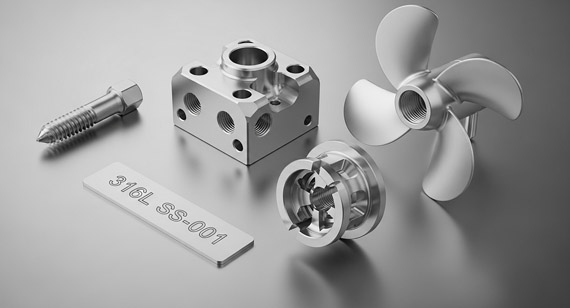
If your components need to withstand harsher environments, then it is time to upgrade to 316 stainless steel or 316L stainless steel.
With the addition of 2% molybdenum (Mo), SS 316’ PREN index reaches as high as 23.1–28.5. This composition makes it much more resistant to pitting corrosion than 304, especially when dealing with chlorides (salts) and organic acids.
As a low-carbon version, 316L offers even better resistance to intergranular corrosion. For CNC machined parts using this material or 316, electropolishing is also highly recommended after machining to achieve a flawless mirror finish.
In fact, any component that can be made from 304 can also be made by 316 for higher corrosion resistance, provided your budget allows. For certain pharmaceutical or food equipment where 304 falls short of strict corrosion-resistant requirement, 316 or the higher-standard 316L becomes your better choice.
For Example:
CNC Machining Cost of 316/316L Stainless Steel
If your parts are involved in chemical cleaning, handling high-salt foods, or belonging to pharmaceutical-grade equipment, 316 or even 316L is a must-have despite the higher cost.
Let’s look at the cost breakdown:
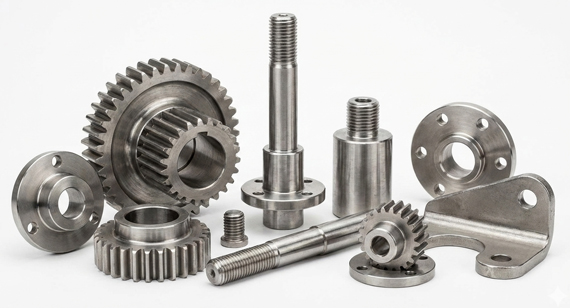
If you are looking to maximize budget savings on components that require food-grade compliance but don't face harsh, wet environments, 430 stainless steel is the ideal alternative.
Unlike the 300 series, 430 contains no nickel, which lowers its corrosion resistance (PREN = 16–18). But it performs exceptionally well in dry environments. A key advantage of this material is that it is highly magnetic—a crucial feature for food safety. In automated production lines, if a component with magnetic ever breaks or wears down, it can easily detect and catch the debris, preventing food contamination.
However, it is not idea for you to use 430 SS instead of 304 or 316, 316L for above mentioned precision component. When machining 430 SS with CNC lathes or milling machines, chips tend to adhere to the tool very easily, resulting in rapid tool wear and frequent occurrences of surface scratches, burrs, and scratches on the workpieces. Therefore, attempting to produce high-precision, ultra-smooth (low Ra value) valve cores, nozzles, or drive shafts using material 430 would lead to unacceptable high machining costs and defect rates.
But you can use 430ss for requirements of food grade + low precision.
For Example:
CNC Machining Cost of 430 Stainless Steel
For components that demand food-grade safety, lower precision fits, and no long-term exposure to moisture, 430 is the good choice to cut down your budget.
Let’s look at the cost breakdown:
To help you make a fast and precise decision, we have simplified the CNC machining selection logic into the following comprehensive matrix:
| Type |
Corrosion Resistance (PREN) |
CNC Machining Applications |
Total Manufacturing Cost |
The Rule of Thumb |
| 304 Stainless Steel |
17.5- 20.8 | Valve bodies, sanitary fittings, Tri-Clamps, commercial blender drive shafts, coffee machine micro-nozzles. | Moderate | The all-rounder. Your go-to default choice for components directly contacting food, provided there are no extreme acidic, high-salinity, or chemical environments. |
| 316/ 316L Stainless Steel |
23.1- 28.5 | Bioreactor mixing impellers, aseptic filling heads/nozzles. | Higher about 25-45% than that of 304SS | The better choice for stricter medical/pharmaceutical environments. |
| 430 Stainless Steel |
16.0- 18.0 | Conveyor roller end caps , commercial juicer blade holders/hubs. | Lower about 15-25% than that of 304SS (only for simple parts) | Best for structural, large-volume, or simple geometric parts in relatively dry environments. |
A premium commercial coffee machine brand approached VMT to manufacture a batch of high-precision flow distributor components for their latest brew group assembly. Because this critical part directly contacts high-temperature, high-pressure, and acidic coffee extractions, it requires a strict food-grade surface finish of Ra 0.8 or better to prevent coffee oil accumulation and bacterial buildup. To minimize their initial Bill of Materials (BOM) costs and stay within budget, the client originally specified 304 stainless steel. However, our engineering team evaluated the machine’s long-term operating environment and warned that 304 would inevitably suffer micro-pitting under continuous exposure to organic acids and frequent chemical cleanings. This would trigger premature part failure and costly warranty claims after the machines were sold to end consumers, ultimately damaging the client's brand reputation.
For quality consideration, we suggested upgrading the material to 316L stainless steel for superior corrosion resistance. To offset the higher material costs and the machining challenges associated with 316L’s extreme toughness and work-hardening tendencies, our CNC programming engineers completely optimized the manufacturing process. By selecting specialized, high-rigidity coated carbide tools and precisely calibrating the cutting speeds and feed rates, we successfully minimized tool wear and reduced cycle times. Following high-precision CNC turning and multi-axis milling to guarantee a perfect fit with the coffee machine’s internal assembly, we performed an electropolishing treatment, smoothly reducing the surface roughness from a machined Ra 1.6 down to a flawless, mirror-like Ra 0.4.
Thanks to our improved CNC processing strategy, the total manufacturing cost was kept around the client’s original budget—not overwhelming too much. These machines assembled with 316L parts have demonstrated exceptional reliability in the commercial retail market with a zero-complaint record for the group. The client avoided devastating after-sales maintenance and replacement costs, successfully elevating their product's premium positioning and market reputation.
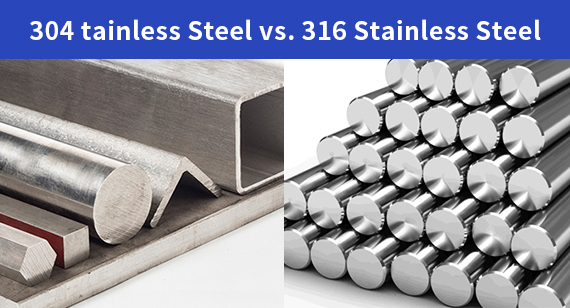
316 stainless steel contains molybdenum, providing superior corrosion resistance against food acids and chlorides compared to 304. While 304 is the cost-effective default for general food contact, 316 is required for harsh environments to protect your product from long-term failure.
Is 430 stainless steel compliant for food-grade CNC machined components?
Yes, 430 is food-safe and highly magnetic, which makes it excellent for automatic debris detection on production lines. However, due to lower corrosion resistance and its tendency to burr during precision milling, it is best limited to simple, low-precision structural parts in relatively dry environments.
Which stainless steel grades are FDA-compliant for CNC parts?
The most universally accepted grades that meet strict sanitary standards for CNC machining are 304, 316, and 316L because they are non-porous and highly corrosion-resistant. Grade 430 is also compliant but is strictly recommended for non-contact or dry, structural components.
What determines the CNC machining cost for food-grade stainless steel?
Machining cost per hour heavily driven by part complexity and material choice. Tougher alloys like 316L cause rapid tool wear and require slower cutting speeds, which increases production cycle times and overall manufacturing costs compared to 304.
Why is 316 stainless steel harder and more expensive to machine than 304?
316 stainless steel work hardens rapidly under the heat and mechanical stress of cutting, creating a tough, gummy material that accelerates tool wear. This demands specialized tooling and optimized, slower feed rates, which increases processing time and overall cost.
What does passivation mean, and why is it crucial for food-grade parts?
Passivation is a post-machining chemical bath that strips free iron from the component's surface, allowing a natural, protective chromium oxide layer to form. This step is essential to maximize rust resistance and ensure your assembled product meets strict sanitary compliance standards.
This article has introduced the typical applications of food-grade stainless steel (304, 316/316L, 430) in precision CNC machining, as well as their differences in machining costs. You can make your choice among the three based on your specific needs: choose 304 SS for common food-contact components that are not exposed to strong acids, high salinity; choose 316 or 316L for higher corrosion-resistant requirements (such as high-temperature organic acids in coffee machines, high salinity, or chemical washdowns); choose 430 SS for structural components or low-precision assembly parts in relatively dry environments to maximize savings on your production costs.
If you currently have food-grade stainless steel precision components that need customization, welcome to send your 3D drawings (STEP files) to us. Our engineering team will provide you with a free DFM (Design for Manufacturability) analysis and the most competitive quote within 24 hours!



 +86 15099911516




 Read more